LRP RIP
If you read some press reports on the forthcoming demise of Lead Replacement Petrol (LRP) the countryside and urban open spaces will be littered with the hulks of derelict abandoned classic cars. Once again this headline grabbing style of reporting has nothing to do with fact.
In actual terms we are now approaching the phasing out of LRP and those classics that have not yet undergone an engineered conversion to run on unleaded petrol will have one fuel option removed. And this is the whole crux of the matter, ‘one of the options’, not a blanket can’t or won’t be able to use, as some reports would have you think.
Today we are better off that at the end of 1999 in terms of available options since experience has provided more accurate information. When leaded was withdrawn from general sale the engineered conversion was the only ‘known quantity’ solution. Additives were then untried miracle devices and many ‘pie in the sky’ claims were being made to attract sales. Even the new LRP was, according to Government leaflets, not to be relied upon to provide the same degree of protection as given by leaded fuel, and only the ‘engineered’ conversion could do that.
This time we still have the engineered conversion, which remains the best long term method of using unleaded without additional wear or degradation to the valves or valve seats. But now we have a number of fuel additives that have been proven by independent testing at MIRA. (Motor Industry Research Association) This being arranged by the FBHVC (Federation of British Historic Vehicle Clubs www.fbhvc.co.uk), the umbrella organisation for most UK classic car clubs and whose role is to represent the interests of the UK classic car movement here and in Europe.
In addition to these two totally acceptable and practical alternative methods of running your classic MG on unleaded, there actually still remains the option to use leaded petrol. Many people forget that in UK law 0.5% of the total volume of petrol sold in the UK can be leaded. In the period just after the withdrawal from general sale it was as rare as hen’s teeth, but in more recent times its availability has spread to 153 outlets, according to the leaded petrol web site. This list of garages selling leaded can be found at www.leadedpetrol.co.uk.
The time schedule for loss of LRP is before the end of 2003, however the reality is that many petrol stations find that LRP sales have been so slow, that better use of their storage facilities is with unleaded fuel. LRP is certain to vanish from forecourts with increasing rapidity as we go into and through 2003.
Options to avoid VSR
Many members who read these early reports have already contacted the Club to seek advice on what they should do. The same advice that applied before leaded petrol was withdrawn from general sale applies now, except LRP is no longer in the equation.
All this talk of leaded, unleaded, LRP, additives and engineering can be quite confusing. The actual problem we have to consider is valve seat recession, which is where the valve sinks into the head. This is caused by conditions in the combustion chamber allowing the valve to stick to the valve seat. When it is next opened by the camshaft, small pieces of the seat stick to it and break away with the valve. This process continues and more particles are attached to the valve, which with normal turning creates a quite effective grinding tool. Thus, the combination of erosion and abrasion makes short work of the valve seats. Outside this is detected through valve clearances closing and loss of compression. This is felt with poor running and eventually misfiring.
One fact that doesn’t appear to be generally understood is that unleaded is not like an acid that erodes metal on contact. All parts of the engine involved in this process have a degree of resistance; the issue is whether that degree of resistance is great enough to cover all aspects of the engine’s operation.
The reality is that for much normal driving, a leaded spec engine does have enough resistance and only during wide throttle operation, together with higher rpm will the unleaded effects exceed the resistance available. The graph (insert appropriate reference to point to it) illustrates this in general terms.
To return the engine’s inbuilt resistance level to the leaded levels means that you have three realistic long term solutions, listed here in no specific order of preference…
1 Use unleaded along with an approved additive (e.g. Castrol Valvemaster) and if the car pinks, very likely with MGB and Midget models, use the additive with a higher octane unleaded such as Shell’s Optimax. (There are many claims for Optimax, including the highest octane unleaded petrol on general sale in the UK) Alternatively use normal unleaded with an additive that includes an octane booster. (e.g. Castrol Valvemaster Plus)
2 Take the engineering approach and fit hardened valve seats, valves and suitable guides. Use unleaded as it comes, adjust ing the ignition timing to suit – usually a reduction in base timing of 2 to 3 degrees – or move to a higher octane unleaded as above.
3 Seek out your nearest supplier of leaded petrol.
Do nothing?
There also remains the option to do nothing, just fill up with unleaded and adjust the timing if pinking occurs. To help illustrate this point previously, I used examples of leaded spec MGBs in the USA that were used for up to 20 years after their demise of leaded on unleaded, with no conversion or additive, and no ill effects other than normal wear and tear.
This apparent contradiction was explained by information credited to BMW in what they described as ‘Lead Memory Effect’. In simple terms, the lead in petrol is a solid lubricant and is in suspension in the fuel. As the engine uses the fuel, this solid is deposited over all components within the combustion and port areas. The constant hammering of the valves on their seats quite simply blends the lead into the surface of the cast iron and as long as no valve grinding or seat re-cutting is done then this residue can provide very long-lived effects.
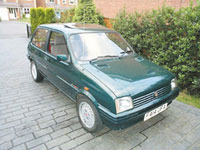
I have had an opportunity to test this theory over a period of about 3 years. The donor car being a well used, and in some ways abused, 1989 leaded spec MG Metro 1300 which I have owned or been in control of between 1992 and 2002.
The brief history of the MG Metro is that it was bought in 1992 as a sub 30,000 mile three year old locally used runabout in great condition. The following 5 years saw the Metro run on leaded and the mileage rise to around the 75,000 mark with no problems and no major work. It then went to my sister who ran it for a couple of years adding around 8,000 miles before I had it back. During this time leaded fuel vanished and the car was run on LRP, which it was not happy with, a story many MG owners can relate to.
From the time of the Metro’s return at about 83,000 miles I simply fed it a diet of standard unleaded, and the improvement in running was marked and immediate. During the following couple of years it didn’t miss a beat apart from one occasion at a little over 90,000 miles when I lost a cylinder quite suddenly. Roadside testing showed number 2 at fault and a genuine suspicion that an exhaust valve had given up. A compression test showed cylinders 2 and 3 equally down, which pointed to a head gasket – later confirmed. Head gasket replacement is beautifully simple on an A series Metro and during the change I looked at the valves and seats and saw clean and pristine surfaces! As soon as it was back together, it was obvious that performance was as good as ever and subsequent fuel consumption checks were normal.
Just over 2000 miles after I replaced the head gasket I passed the Metro onto friends who also use it for commuting. Being as I was still able to keep a close contact with the car I can say that up to 98,000 miles when the car recently passed to new ownership, it showed no drop in performance, economy or general engine response.
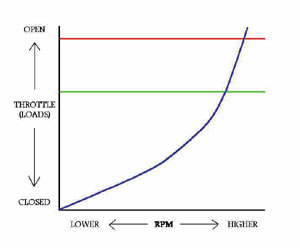
Graphical display of the leaded Vs unleaded issue. The blue line represents the increasing load, the green line is where errosion starts with unleaded, and the red line where errosion starts with leaded/unleaded with additives, and the engineered solutions. Clearly if the engine load and rpm is kept o moderate levels there is no issue whichever fuel is used.
Making a total of 15,000 reliable miles with a standard leaded spec A series engine on a diet of just unleaded 95RON. Of specific note is that during this period the car has been in use on motorways and trunk roads at well in excess of 4000rpm for significant periods, frequently with wider throttle openings. More than enough load to generate valve seat recession on a ‘soft’ leaded only cylinder head. I don’t claim any definitive results from this test, but as in many similar types of test I have done previously, it does give a clear indication as what may be expected if others follow a similar route.
Solutions and costs
The experience I gained from following this deliberate path is very interesting and quite useful in helping to support the knowledge already in the public domain. It is quite convincing in some respects, but it is not definitive, in that you can’t say that every other engine will follow the same path. To provide a complete proven solution we have to refer back to use of approved additives, re-engineered components or leaded fuel.
Following close behind engine reliability issues, come cost, which for almost all of us is of huge importance. How many have accurately compared the costs of all the available options, not many I suspect, with most ‘grinning and bearing’ the costs as, ‘one of those things I have to live with to enjoy my MG’. First, when using a 250ml bottle of Castrol Valvemaster is added at the recommended dose that treats 250 litres of fuel the additional cost per litre of petrol is…
To better display the total fuel cost please take a few moments to view the table Please note that the base fuel prices were taken from various petrol sites during one day in September 2002 in the Birmingham area and your local costs can be inserted instead to keep an up to date cross reference. To these I have added the costs of Castrol Valvemaster and Valvemaster Plus (the Plus being an octane booster).
| Number of units purchased | Cost per litre Valvemaster |
Cost per litre Valvemaster PLUS |
| 1 | 2.4p | 4.0p |
| 6, or multiples of 6 | 2.0p | 3.4p |
Engineered solution
Fuel costs are easy to calculate, but the route I always put at the top of my list is the engineered route. How can the costs of this option be compared to the additive route? Well let’s have a look.
The cost of converting a Midget, MGB, or other 4 cylinder engine is going to be similar, but there is quite a variation depending whether you do all the labouring yourself or whether you have it done by a professional organisation. It may be possible to have a local engineering shop just fit valve seat inserts, cut new seats, and recut existing valves. This work with the gaskets and fluids needed to complete the job may well be possible inside £150.
However, for most DIY types the favourite route is to buy a completely rebuilt and converted head on exchange. Cost of heads will be around £200 for the 4 cylinder MG engines, but for this you should expect a guaranteed and fully rebuilt unit. An advantage is that with modern valve seat cutting equipment you see more accurate cuts leading to a marked increase in flow efficiency that in turn more than offsets a common loss of power when going unleaded. In addition to your newly purchased unleaded spec cylinder head you have to add the fluids, gaskets, etc, which makes an overall cost around £250.
If the fully professional route is followed, where you drive to your specialist, leave the car and then pick it up later fully converted, then the costs will be considerably higher and perhaps up to £500.
£250 is a large lump for many to spend, £500 is a very significant amount. The inconvenience of having to add the additive every time you fill up now starts to look insignificant! This is the reason I suggest engineering work should be rolled into other work, be that the need for a head gasket change or other necessary engine work, and not applied to an engine in the ‘twilight’ of its service life. To the best of my knowledge most companies replacement engines and heads are automatically done to an unleaded spec and this cost is absorbed into the price, or only a small extra premium is added.
| Fuel Type | Cost per Litre | Cost per Gallon |
| 95 RON Unleaded | 73.9p | £3.36 |
| 98 RON Super unleaded | 81.6p | £3.71 |
| 98 RON Shell Optimax | 79.9p | £3.63 |
| 97 RON LRP | 75.9p | £3.45 |
| 95 with Valvemaster | 76.3p (75.9p) | £3.47 (£3.45) |
| 95 with Valvemaster + | 77.9p (77.3p) | £3.54 (£3.51) |
| 98 with Valvemaster | 84.0p (83.6p) | £3.81 (£3.80) |
| 98 with Valvemaster + | 85.6p (85.0p) | £3.89 (£3.86) |
| Optimax + Valvemaster | 82.3p (81.9p) | £3.74 (£3.72) |
| Optimax + Valvemaster+ | 83.9p (83.3p) | £3.81 (£3.78) |
| 99.7 RON leaded | 103.9p | £4.72 |
The blue figures in brackets reflect the lower cost of Castrol Valvemaster products when bought in multiples of six bottles or more. MGB and Midgets are tuned for 97 octane in standard form, as shown in the vehicle handbooks
Remember though that once engineered and set up, the engine needs no other consideration and you simply fill with your chosen fuel. However, you should give some attention to your fuel hoses, which if old will rot much faster when unleaded is running through them. A sobering thought from my experience is that unleaded fires are more intense and the fuel appears more volatile, so leaks are an even more serious issue to avoid.
Anyway back to cost comparisons and for ease of calculation I will assume the DIY cost as £250 and the professional cost as £500. Many ask how long it will take the fuel savings to work through and cover the cost of conversion. The fact of the matter is that the savings gained by not having to add Valvemaster to base unleaded saves a whole 9p per gallon! That means that you would have to buy 2777 gallons (12624 litres) of fuel at the cost shown in the table to cover the initial DIY conversion cost of £250, which equates to just short of 70,000 miles, assuming an average 25mpg! Note that professional conversion costs being double, doubles that projection!
The best financial scenario would be if you’re currently running leaded – most unlikely I would suggest. Whatever, the cost saving per gallon is now £1.36 between base unleaded and leaded, so now we see the need to buy 184 gallons of fuel before the £250 conversion cost is saved. That equates to a more realistic 4600 miles, or 9200 miles for the professional conversion cost.
Overall then it is clear that your not going to invest in the engineering route for financial gains, although as fuel prices increase the picture will get better. No, the reasons for the change will be for convenience and the comfort of knowing the engine can simply run with normal pump fuels. Quite whether it is going to run well on these increasingly common low sulphur, and soon no sulphur petrol is another story for another day.
As with so many things in life there is more than one route to achieve a specific goal. Some routes will be short, some will be long, some will be easy, some will be hard, some will be cheap some will be costly, and many are littered with con men and prophets of doom! Most people though, when given a current map, can find a route that suits them. This feature, like previous ones I have done on this subject, is intended to be that map.
MGOC MEMBERS Offer

 |
 |
lead replacement petrol additive
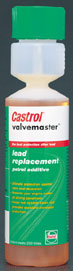
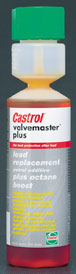
Castrol Valvemaster is the most effective and most cost effective lead replacement additive available. Most Effective: Endorsed by the FBHVC and independently tested. Castrol Valvemaster Plus is shown to provide the highest protection against valve seat recession of all the products tested. Most Cost Effective: Highly concentrated formula means that just one 250ml bottle treats 250 litres, that’s over five MGB tankfulls of fuel. Castrol Valvemaster Plus is less than half the price of other octane boosted additives! Change to Castrol Valvemaster: Castrol’s phosphorus formulation is the best non-lead additive, enabling you to safely change from less effective expensive additives or leaded fuels to Castrol Valvemaster without detriment. Castrol Valvemaster Plus Octane Boost One 250ml bottle at £9.99 treats 250 litres Castrol Valvemaster One 250ml bottle at £5.99 treats 250 litres Delivery postfree to UK mainland destinations. This 6 for price of 5 with free delivery offer remains ongoing. Telephone MGOC Spares & Accessories on 01954 231318 or 230928 6 for the price of 5 |