MGOC TRIP TO The Schlumpf Museum
Ever since the 1970s when I first read of the discovery of a vast secret hoard of classic and thoroughbred sports cars, I have been fascinated by the story of this collection acquired by the Schlumpf brothers and hidden away in a textile mill at Mulhouse, France. There was great excitement in the national and motoring press after the initial disclosure and I can still recall the headline ‘Aladdin’s Car Park’ accompanied a photo of the numerous dusty Bugattis housed in a sumptuous setting and ranked up, exquisite car behind exquisite car stretching off into the far distance. I was delighted when last year I had the opportunity at last to visit the collection with the MGOC Travel Club.
Italian born Hans and Fritz Schlumpf were brought up in Mulhouse by their widowed mother Jeanne. The Schlumpf brothers set up their textile business in 1935 and built up a significant empire. Fritz had an insatiable passion for quality European cars particularly Bugattis and by the early 1960s he had the funds to indulge his interest. This was before the Classic Car movement had taken off and old pre-war racing cars and luxury cars were still plentiful and not in any great demand so Fritz began seeking out his favourite models. He sought out single examples or complete car collections from all over Europe and the USA to build up his incredible line-up of over 400 cars. He was so driven by his desire for certain models that he was often prepared to pay well over the odds for a particular car or buy up a entire collection just to acquire one model. The objects of his passion were mainly Bugattis of every type and designation and he often acquired more than one example of each model; as well as a wide range of other interesting marques such as Alfa Romeo, Ferrari, Hispano Suiza, Maserati, Mercedes and Rolls-Royce.
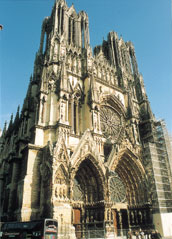
The Cathedral at Rheims
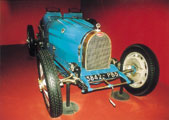
The Bugatti holds a unique appeal with its combination of top quality engineering, dynamic race bred qualities and stunning sculptured aesthetics. Art and engineering seem fused inextricably in the Bugatti and the lightweight low slung Type 35 became the definitive racecar of the 1920s. Between 1925-27 Bugattis notched up 1,851 race wins but Ettore Bugatti’s marketing masterstoke was to offer his customers a vehicle identical in all respects to the ones the company raced themselves.
In 1965 Fritz Schlumpf decided to transform one of his old textile mills into a special display workshop to house all of his cars and also to provide restoration facilities. Fritz was particularly keen on originality and would visit the 200,000 sq-ft shop in Mulhouse daily, choosing the colours and specifying the type of restoration each car would receive. He refitted the old mill’s interior and laid a red tile walkway with gravel floors for the cars to stand on. This vast display area was illuminated with specially made cast iron lamps in the art noveau style copied from those on a bridge in Paris. But the brothers remained very secretive about their car collection, only showing it to a few favoured guests and special trusted visitors on rare occasions.
While his factory flourished the Bugatti obsessed collector continued to seek out cars and despite a depression in the textiles industry during the 1970s his collecting continued unabated. However on March 7, 1977 after a period of growing industrial unrest the discontented workers staged a sit-in strike at the Schlumpf offices and the secret museum in Mulhouse. The strike went on for two years until the brothers were facing bankruptcy and they decided to flee to Switzerland. Fortunately, after discovering the car collection the strikers’ initial outrage was abated and instead of ransacking the place and destroying everything they decided to make this extraordinary collection into a ‘Workers’ Museum’ and over the two-year period received over 800,000 visitors. In 1979 a liquidator ordered the building to be closed and it was then sold to a specially formed association of new owners, this group included the City of Mulhouse, the Regional Board of the Alsace Region, the organizers of the Paris Auto Show and the Automobile Club de France. The future of the museum was now assured and the collection became listed by the French Government as National Heritage and cannot be exported or broken up. A new company took over management of the museum and during March 2000 it was renovated and re-opened and is now the largest automotive museum in the world.
This particular trip is not about touring as the museum is based in Mulhouse quite a long journey and practically on the German border. However the drive across France is interesting and divided into manageable sections while the first night at Rheims provides an ideal stop over with a comfortable and well-appointed hotel while the city offers the opportunity for sightseeing or shopping. Driving in France is not too much of a challenge even in a right hand drive car however negotiating busy city centres requires maximum concentration. Of course it is helpful if your passenger is also a skilled navigator although the main roads are normally well sign posted while any diversion from the route usually only provides extra interest.
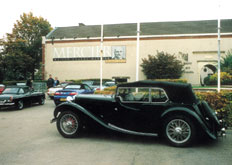
The MG VA of Michael Taylor and Michael Fishwick outside the Maison Eugene Mercier
From Rheims we made the short drive to the Maison Eugene Mercier in Epernay to visit the vast labyrinth of cellars 30 metres below ground level where the celebrated Mercier Champagne undergoes, fermenting, bottling, riddling (turned once a day for 6 to 8 weeks) and is finally stored.
Descending to the tunnels via a glass elevator revealed a number of panoramic displays outlining the history of Mercier. The founder Eugene Mercier was famous for his dramatic promotional stunts including balloon trips over Paris with the occupants quaffing his finest champagne. The tour of the cellars is conducted on a special lazer guided train, which trundles around the 18km of tunnels. An interesting and very informative commentary was provided by a charming English girl. Among her insightful and amusing tales was the story of the Champagne rally, in 1950 the founder’s grandson Jacgues Mercier organised a ‘Champagne Rally’ to mark the launch of the Renault 4 CV model. The 4CVs actually competed on a special stage inside the tunnels, amazingly without smashing a single bottle.
The tour concludes as you would expect with a glass of excellent Champagne with the opportunity to buy a bottle or even a case at a much reduced price, so its worth making sure you have some spare room in the boot.
Arriving at Mulhouse and finding the hotel in the complex one way system is challenging but well worth the effort because the hotel is perfect. The art deco style is wonderfully atmospheric and with its prevailing theme of automobiles and art objects really complements the museum. This is no accident as the hotel was originally acquired by the Schlumpf brothers and furnished to reflect their obsession with the 1920s and 30s.
 |
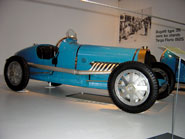 |
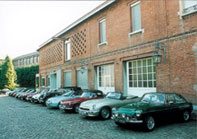
| We were allowed access to the inner courtyard of the Schlumpf Museum, the immaculate MGC GT of Derek Orchard and John Ellis in the foreground | Unmistakable Buggatti lines but this one is fitted with an experimental V16 engine which proved to be much too powerful and upset the fine balance of the chassis |
It is difficult to describe the atmosphere of the Schulmpf Museum, most automotive collections are assembled somewhat coldly with a view to reflect a National theme of car production in a chronological order or to mark the progression of a company’s design philosophy. Fritz Schlumpf ‘s collection is deeply personal and simply reflects his total obsession with the output of Ettore Bugatti. This means that the exhibits assembled are an irrational accumulation of some of the most extravagant and beautiful cars ever built. Among the most ostentatious is the Bugatti Royale Type 41, the car on display was fitted with a ‘Coupe Napoleon’ body and was Ettore Bugatti’s own runabout. Although this ultimate 14.7 litre motor car was designed for monarchs and heads of state not one example was actually bought by a member of a Royal family. The Royale was not a commercial success and only six examples were ever completed, however the massive engine was to eventually find service as a propulsion unit for railcars. There are numerous Bugatti racing models and even a specially adapted Type 40 which was driven right across the Sahara desert from Gao to Adrar (1,500Kms) in a record time of 54 hours by Lieutenant Loiseau in 1929.
 |
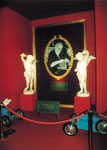 |
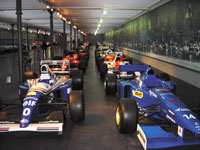
| An impressive grid of some very famous F1 cars | At the entrance of the collection was this shrine dedicated to Jeanne the mother of the Schlumpf brothers. The two toy Buggattis symbolise her adoring children, Hans and Fritz Schlumpf |
The predominance of Bugatti in the collection provides a most comprehensive showcase of the products of Molsheim but there are many other important and rare cars on show. There is also an impressive grid of grand prix cars through the ages with French racing blue the prevailing colour.
As you walk around the museum a personal audio unit provides an in-depth commentary on all the main exhibits but do make sure you pick up the English version. Also there are a number of display units running videos and as well as several small cinemas showing historic motoring films including the story of the collection and of the Schlumpf brothers. There is also an excellent restaurant and the usual museum shop full of motoring books and model cars.
 |
 |
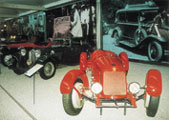 |
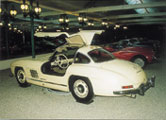
| 1929 Bugatti Type 35 B the cast alloy wheels were easily interchangable an innovation at the time | 1955 Mercedes 300 SL Gullwing Coupe | 1930 Maserati 2000 after it retired from the track this full-blooded Grand Prix racer was used on the road until 1966 |
Our return journey involved a night at an interesting old hotel in Verdun, strangely decorated and furnished in a medieval style where the group enjoyed an excellent evening meal. Next morning we had a leisurely drive back to port with plenty of time to investigate the local area which is surrounded by World War I battlefield sites. We made a brief visit to one of the many well-kept cemeteries, then on to a look at a preserved WW I French fortification. Here we were moved by the intensely sombre atmosphere of the preserved battlefield and although now overgrown with shrubs and trees the area remains eerily silent with no birds or wildlife evident.
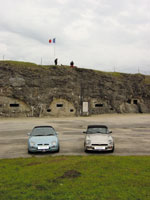
The battlefields outside Verdun
We had crammed a great deal of interesting activity into just a few days with this trip to Mulhouse and thoroughly enjoyed every minute. Although the Schlumpf Museum is unique in that it reflects the obsession of one man it also seems to capture the essence of the best in motoring in the 20s and 30s, a truly Golden Age. If you fancy a making a trip to see this remarkable car collection, there are still some places available for this year’s run on the 9th -15th October 2003, call the MGOC Travel Club for further details.