Spotlight on McLaren
SPOTLIGHT ON McLaren
SPOTLIGHT
The expression “It’s not what you know but who you know” came true recently when Zoe Heritage bumped into old friend and fellow MG owner Anna Guerrier at the Coys Historic Festival at Silverstone. Anna, who has competitively raced her own MGB and has also rallied an MGB, B and K3 Replica with husband Keith for many years in historic events, now works for McLaren International as their PR & Marketing co-ordinator. Seizing the opportunity, Zoe quickly accepted an ‘invitation’ to visit this successful Formula One Team’s headquarters, seeing and learning a little about life behind the glitz and glamour of the F1 circus.
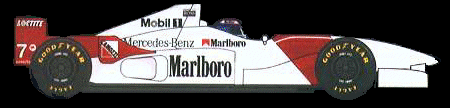
A privilege indeed it was to be standing in McLaren’s reception area surrounded by over 350 trophies on show and a display of red and white Formula One racing cars, collectively bearing testimony to their successful heritage. The cars are all past winners, emblazoned with the names of Senna, Lauda, Prost and Berger; the trophies are labelled with the names of Grand Prix Circuits, year and etched mostly with the words ‘winner’ or ‘champion’. It is no secret that this F1 Team have been going through a relatively lean patch for the past three years but prior of 1993, the McLaren cars had won a total of 104 Grand Prix, spread amongst 11 different drivers (including British driver James Hunt who took the Drivers’ Title in 1976) and three different makes of engine. In total, McLaren have won nine Drivers’ and seven Constructors’ World Championships, making them one of the most successful teams in the history of Formula One.
HEADLINE NEWS
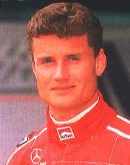
The timing of my visit coincided with some major news that had the Woking-based Headquarter’s humming. After 23 years of close association with Marlboro as major sponsors, it was announced that this liaison would be terminating at the end of the current season. Instead, a five-year deal with German tobacco giant Reemtsma had been signed who enjoy, through its West and Davidoff brands, worldwide sales of US$7 billion annually. The 1997 season will find the cars resplendent in a new livery (as yet undecided) and known officially as the West McLaren Mercedes Formula One team. Other changes rumoured as we go to press concern the end- of-season shuffle-round of F1 drivers whose contracts come up for renewal. Coulthard only joined McLaren at the start of ’96 but fellow team driver Mika Hakkinen, who has been with McLaren since 1993, may well be on the market. Will David have a fellow Brit as team-mate in Damon? “Of course it is a possibility but we just do not know at this stage” was Anna Guerrier’s guarded reply.
Love it or hate it, the Grand Prix is a fact of life in many people’s homes on a Sunday afternoon. Sixteen races, spanned over 9 months, held in 13 different countries on 4 continents, are watched by 500 million people on TV worldwide and accompanied in Britain by Murray Walker’s apoplectic commentary. We glimpse beautiful people drifting around exotic locations, revelling in the backdrop of man and machine battling for glory in the face of danger. Anna explained that in reality it is a long way from being all hyped razzmatazz and patiently explained the F1 way of life over the course of a year. “Development is an ongoing concept but it is always a rush to launch the new car in February followed by serious testing before the first race in Adelaide in early March. A visit home precedes the next race in Brazil three weeks later where they all stay until the race in Argentina; after that, the races are 2 weeks apart throughout the summer.
AT THE CIRCUIT
“Moving a whole circus of race cars and team personnel around the world at 14 day intervals is quite an undertaking. We freight out around 50 tons of cars/parts and around 65 people for each Grand Prix. For the European events we go Thursday, back Sunday night.
Generally we take 3 cars – one for each driver and the T-car (third car) which usually sits in the middle of the pit garage for immediate access in case it is needed. On arrival at our pit, the floor is painted, walls covered in our special panels and tool boxes arranged to make it as efficient, spacious and effective an area as possible. At the circuit, the Team Manager (Dave Ryan) takes overall charge of the team and is involved in all tactic decision with Team Principal Ron Dennis, race engineers and drivers. From the start of testing until the chequered flag falls, each driver is assigned his own race engineer who discusses the set-up and changes to the car and interprets all driver’s comments and computerised data acquired. Communication from car to pits is maintained at all times via a Kenwood radio system. Routine pit stops take between 7 to 9 seconds and involve 22 people to change all 4 tyres and refuel.”
After each and every race the cars return to Woking where they are completely dismantled and every component checked. “We test everything to a far greater stress level that it will ever be subjected to in a race” explained Anna, “taking every safety precaution we can”. Each part of the car has a ‘shelf life’ and is scrapped on its expiry regardless of condition. A factory visit was more than I had dared hoped but Anna whisked me off down the stairs and conducted a knowledgeable and competent tour. The actual race cars of David Coulthard and Mika Hakkinen, fresh from their efforts in the Belgium Grand Prix at Spa, watched over by the T-car. Technicians had already stripped them and dispatched the components to the various departments where the extensive testing is carried out. The factory would be bettered termed ‘laboratory’ as the brightly lit, clinical premises are filled with technicians wearing spotless white coats, working with state-of-the-art computerised technology. Not a single drop of oil in evidence!
CARBON FIBRE
McLaren literally make the majority of the car ‘in house’. Computer Aided Design is now used by all F1 teams and each component is detailed in minutiae before being made. Weight is of the essence so much is composed of carbon fibre. For example the chassis is made entirely of carbon fibre, making it five times lighter than steel but twice as strong, weighing in at around 40kg. The team make all their own carbon fibre parts, painstakingly layering strip upon strip before it is cured in large ‘ovens’. During the tour, we witnessed a technician creating one of the new design wishbone suspension arms, building up about 23 layers of carbon fibre by hand. Even the pedals are individual designed to suit each driver’s foot, each one taking about 2 days to make. The factory also make all the metal parts, from exhaust system to each individual gear cog using high-tec computerised tools and workshops. On average, 6 gearboxes attend each race (3 for each car) with 59 available ratios, resulting in 472 ratios at each Grand Prix. The cars are powered by the Mercedes-Benz 3,000cc V10 engines with outputs of around 600 – 700bhp which of 595kg of the car (including driver) make it 15 times more powerful than the average MG. 0-125mph is about 5 seconds with a maximum speed of 211mph.
DEMANDING SCHEDULES
McLaren International have a workforce of 280 people, 60 of which will be part of the Test and race Team who travel extensively, the remainder providing the expertise in research and development. The demanding schedules mean that there are separate teams for test and race scenarios, closely interacting to exchange knowledge and information. Each team consists of about 25 engineers and mechanics with their own fleets of lorries and equipment to work independently of each other.
“The cost of producing a F1 race car is unquantifiable” explained Anna, “as the on-going research programme constantly changes components from month to month.” Added to this cost equation is the bill for the driver’s services which is understandably high on account of the involved risk. To perform to the best of their ability, drivers have to be super fit in order to cope with high stress levels during a race and cope with the weight loss of around one kilo an hour. Part of the team is a full time physio-therapist who devises diets and fitness scheduled for each driver so that maximum stamina and mental alertness is achieved.
RACE DAY
A typical race day for David or Mika means leaving their hotel around 7am, pit stop practice at 7.30am, morning warm-up at 9.30am on the circuit for 30 minutes for the race cars followed by engineers de-brief, 11am compulsory drivers’ briefing with race stewards, then media calls and press appearances throughout the remainder of the morning before a light lunch at noon. An hours relaxation in the form of a sleep, massage or chatting to friends follow before he is then strapped into his car at 1.30pm. Half an hour later the red light changes to green and 200 miles or 2 hours (whichever comes first) of F1 Grand Prix racing follows. Win or lose, all return home later that evening for a short respite before the whole cycle begins again. Where’s all the party time, I wondered?
BACK ON THE PODIUM
“Life in the world of Formula One is more of a culture than a job. Week-ends just merge into the working week and even the drivers are often busy on the interim week-end on various PR work for the sponsors. David and Mika both live in Monaco but seldom see much of their homes during the season. If they are not racing or testing, they are opening shops or night clubs for Hugo Boss or lending their names to other sponsors’ activities somewhere in the world. The McLaren team battle against time week after week to get a better car out for the next Grand Prix and I’m happy to say that we are now back on the podium once more” said Anna. “The work is tough but the camaraderie amongst the McLaren team make it a super place to earn a living. In a crisis, everyone pulls on the same rope thankfully, and I am quite certain that next season will see us back to all our former glory.”