MG Express
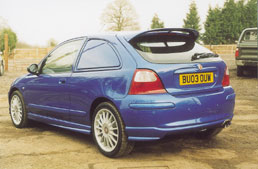
With the formation of the MG Rover Group in May 2000 the shackles of being a weak subordinate to a bigger company were cast from MG’s wrists. Since then we have seen a proliferation of MG models which not only follow previous accepted definitions relating to what MGs should be, but some that clearly don’t. The MG of the 21st Century respects the past but will not and should not be constrained by what has or hasn’t gone before. This is the clear view of the true petrol heads now at the helm at Longbridge, and I am sure they will not mind being described in this way. They are also shrewd business people and have a clear goal to not only make cars which people want to buy and enjoy driving, but also to make their company profitable.
A quick glance and you wouldn’t spot it was a van
This raising and widening of the MG model portfolio saw the announcement on the 13th February 2003 of the new CDV versions of the Rover 25 and MG ZR ranges. CDV stands for Car Derived Van and quite simply is a description described by Road Traffic Law as a commercial vehicle under 2000kgs that is based directly on the passenger car version of the model. The White Van Man labels were quickly aimed along with a wide range of other comments, and once again some in the MG fraternity viewed the news with gloom.
However, whilst there is some risk involved, this is actually a logical and potentially very effective route to follow. It is also not something that has been thought up on a whim and developed in a knee jerk reaction to help sales that are not as strong during times of international uncertainty, but one, which was actually being discussed during 2000.
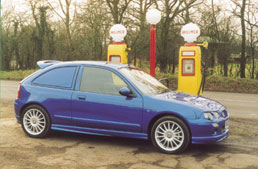
The MG Express model range comes in 105, 1.4 petrol (103Ps), TD, 2.0 Turbo diesel (101Ps) and the 160 (1.8VVC 160Ps) versions, the latter being the one tested. Let’s take a look at what you get before I describe the driving experience. Firstly the body is based only on the three door saloons and when looking from front or rear you really can’t tell this is the CDV. The overall external look is quite simply the same as the ZR version. Even when viewed from the side some colours like Trophy Blue of the test example requires a hard look to register this has steel rear side windows, the best tinted windows to date! Please note you can’t get a white one, MG versions only come in colour, two solid, three metallic and five pearlescents.
So the outside is almost identical to the ZR saloon, what about inside? Well from the back of the front seats forward is the same as the ZR. Behind those seats is a substantial half height steel bulkhead to restrain loose items in the back. This can be added to with an optional upper section grille to completely separate the front from the rear. Overall, the rear load space is 979 litres and the maximum weight that can be carried is 480kgs, but note that includes driver and passenger.
The rear load area consists of a flat load bed, which is supported by a new steel square section frame permanently attached to the car’s body. This frame incorporates four very substantial lashing down points that interestingly I was told were strong enough to lift the whole vehicle. Hmmm yes – obviously strong and no excuse for loose loads, but lifting the vehicle is perhaps only of interest to the producers of the ‘World’s Strongest Man’ programme.
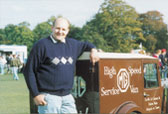 MG Vans are not a new concept |
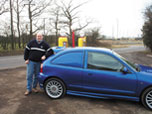 The author with the latest ‘High Speed Van’ from MG |
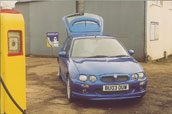 High speed hatch-back |
The rear floor is split and has a removable section above the spare wheel. This immediately reminded me of the MGBGT rear floor area, even down to the two Dzus fasteners used to secure the floor in place. The sturdy nature of this floor support frame, and how solidly integrated it is to the body clearly points to benefits in body stiffness above that of any of the ZR saloons.
The whole of the rear area is trimmed so it doesn’t look like a normal van and is clearly not an ideal vehicle for a builder. It quite simply looks like a car with the rear seats removed. It is taking the concept of a hatchback with rear seats permanently folded flat for load carrying. This means that it is similar to a normal hatchback with the rear seats permanently folded.
On the mechanical side of things just read off the specification sheet for the equivalent saloon all the way down to the alloy wheels, previously alloys were a no-no for commercial vehicles. In fact this is one of the best saloon commercial vehicles I have come upon.
Frugal on fuel
Driving is always the proof of the pudding and it was with a great deal of interest that I got behind the wheel of the Express 160 demostration vehicle. I was fortunate in some respects to be perhaps the first outsider to the company to be given the keys, before the proverbial ‘tree fruits’ were thrashed by other testers who seem to have little mechanical sympathy or respect for other people’s cars. On the other hand I am familiar enough with K series engines to know that they need at least 6000 miles before giving their consistent best.
First impressions on preparing to drive showed that the seating position was slightly tighter than I recall but at least the 160 has (what I regard as a necessity) seat height and lumber adjustment. Readers please note that I am not that small in build, but I fit very comfortably in the TF. Trying to add to my comfort factor I did recline the back, but the optional upper bulkhead grille then rubbed against the back of the seat. When driving this would create an annoying squeak, and apart from being obtrusive, as there was little other noise, it is something that would worry me as it might lead to a damaged seat. If the optional upper grille were removed then it should solve this specific issue.
Being familiar with how well the ZR 160 goes meant that I wasn’t looking to explore the red line limits just for the sake of it, but I did test a couple of specific areas out where the CDV conversion could impact. One as many hatchback owners will testify to is a significant increase in road noise intrusion when the back seats are dropped. Here I am happy to say that there was only a slight increase in tyre noise at lower speeds but beyond this the additional rear floor and full internal trimming kept the noise levels down to saloon with seats raised levels. Likewise creaks and rattles, something some ZR owners have reported problems with, could also have been increased in line with previous van conversions of saloons, but this was not the case.
Lack of creaks and rattles is often directly related to body stiffness and earlier I mentioned the solidity of the new load floor structure. I deliberately went along some quite familiar roads with rough surface, adverse cambers and section with a drop into and out of a dip with a double bend. This short section of road confirmed to me quite clearly that the body of the Express 160 definitely feels stiffer than the ZR 160, which in performance terms should make for a better handling vehicle. It was certainly very impressive in this respect.
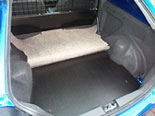 Rear floor lifts up after the release of Dzus fasteners |
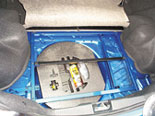 Spare wheel bay with body stiffening |
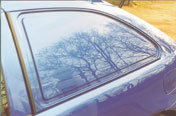 Ultimate in tinted windows |
The rest of the drive experience did nothing to move my feeling that this was in all dynamic respects as good as and perhaps slightly better than the equivalent saloon. So what else does it offer? Firstly, there is the small issue of around £400 reduction in purchase price, and then things start to get even better. The ABI insurance rating for the Express 160 is only 5E, whilst the ZR 160 carries 15A. All ZR and Express models also come with Thatcham Cat 1 security as standard now. This insurance and security aspect is sure to play a major part in some purchase decisions. Benefits don’t stop there as I am told that company car drivers would be taxed around £1200 in the 2003/4 tax year for a ZR 160, but since commercial vehicles aren’t calculated the same way the tax liability could be around £1000 less. Now who says that making a Van out of the ZR is stupid?
MG Rover anticipates sales of the MG Express to go to many who currently operate more mundane plain looking CDVs. Adding pizzazz to the small commercial vehicle market is sure to add sales from that quarter and add others intending to use the vehicles for business purposes. However, the close connection to the saloon variants is intended to attract the young activity types who need space for sporting equipment, yet want something sporty. Here is the new niche with what clearly is a very sporting two seat MG, which I think could very well see sales take off.
Roger Parker