Buying an MGTD
Production History
Production of the MG TD was started in 1949 and it made its debut in January 1950 as a replacement for the popular and successful TC. The TC had established very strong export sales and to meet the demands of the overseas market it was decided to produce a new model with a better ride, more interior space and more up to date suspension. To achieve this, the new MG Midget was based on a shortened version of the Y type box section chassis, although on the TD the rear rails passed over the top of the back axle instead of underneath. The new Midget featured independent front suspension, based on a system of coil springs and wishbones, a design that was to be retained on the MGA and MGB. Another new feature was the excellent high-geared rack-and-pinion steering. Braking was by hydraulic 9″ drums with twin leading shoes at the front which provided competent stopping power. The TD continued to use the XPAG engine of 1250 cc fitted with a Y type camshaft which improved its power range.
TD MK II
This was a competition version of the TD and was sold alongside the normal car. These models are now quite rare and were fitted with a Special Tuning stage 1/1 A engine which produced around 60 bhp. The MKII also featured twin fuel pumps and additional Andrex shock absorbers fitted to all four wheels. The TD MK II competition model was known in the United States as the TDC. A genuine MK II model can be identified by its chassis number prefix of TD/C and on later cars, from engine number 17029 (June 1952) by the engine number prefix of XPAG/TD3
First impressions
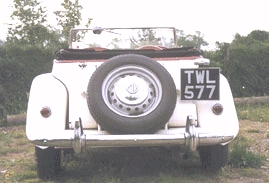
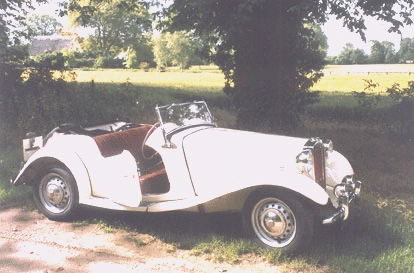
Although the TD was well received by the motoring press, the new shape of the car was not immediately popular with MG traditionalists who preferred the leaner more angular lines of the TC. The Y type drilled disc wheels were particularly singled out for criticism, in combination with the wider body they made the car look lower and more stocky. Despite this initial criticism the TD was a great success and during a three year production run it sold at a faster rate than any previous MG and was especially popular in North America. Total production of the TD was 28,643 with an additional 1,022 of the TD MK II competition version which was built at the same time.
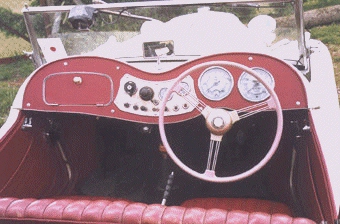
Leather bench seat gives surprising comfort and support in the traditional cockpit
Road tests
The contemporary press reviews of the TD were favourable, they found that the car performed very briskly and were impressed with its 60-65 m.p.h. cruising speed. A top speed of 78 mph was attained with the windscreen folded flat and only the driver in the car. The Autocar praised the steering for being light, accurate and direct, with only small movements of the wheel required to provoke a quick response. “On the open road it is necessary only to hold the wheel very lightly and long fast bends are taken more by leaning the body into the corner than by steering round it.” They summed up the handling of the car by saying that it was so well balanced that it inspired confidence and even an indifferent driver could make a good showing behind the wheel of a TD.
Driving a TD today
The engine is surprisingly quiet, flexible and extremely tractable, pulling smoothly away in top gear from speeds as low as 10 m.p.h. However, Autocar also acknowledged that for prolonged touring a slightly higher top gear would have been useful. This becomes very apparent when driving the TD on motorways as the most comfortable cruising speed is not fast enough to keep ahead of the bulk of the traffic, especially the juggernauts. It is on B roads and twisty country lanes that the little sports car feels most at home, its brisk acceleration and nimble handling making it great fun to drive through the bends. The engine will rev enthusiastically and the gear change is excellent, provided you take your time over making the changes. Brakes are good and stop the car in a straight line but it is wise to allow a greater stopping distance for the TD than you would in a modern car. The hand brake is the fly-off type for a quick getaway, which is a charming period feature. The TD Midget acquits itself really well in town, where its performance, manoeuvrability and excellent all round visibility with the hood down, make it ‘a joy to handle in traffic’ as the contemporary advertising claimed.
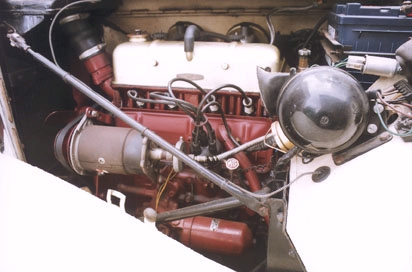 XPAG engine reliable and free revving.
Weather equipment
The TD has a fully folding fabric hood and full set of side screens to provide protection from the elements. The large front side screens are attached to the doors and a smaller pair slot into the side of the body behind the doors. When assembled the hood provides a surprisingly snug and reasonably water tight interior. However, there is the odd gap where the side screens do not quite meet the hood and this can cause the occasional draught. Door mounted side screens have a hinged lower panel to allow you to make hand signals.
Living with a TD
The TD is at its best when driven in fully open form, affording excellent all round vision, this brings a sharp awareness of the road conditions and the proximity of other traffic. The open feel of the cockpit is exaggerated by the rakish cutaway doors which are hinged at the rear. This arrangement makes them sometimes unkindly referred to as ‘suicide doors’ because they will blow back should they fly open. Although in practice the doors are sturdy, secure and the rear hinges make it easier to get in and out of the car.
The leather covered seats have individual bases combined with a bench type backrest, despite this the TD is very comfortable and there is adequate adjustment for all shapes of driver.
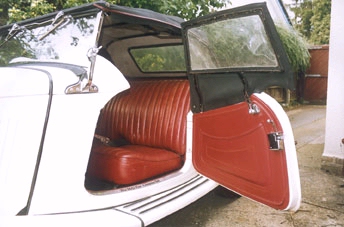
With all weather equipment in place the rear opening doors provide good access to the comfortable cockpit. Space behind the seats provides luggage carrying area
Driving with the hood and side screens in place is quite cosy and once the engine is warm the absence of a heater is not a problem. However, not having any form of demisting system means that it is necessary to always carry a wash leather to keep the windscreen clear. The tiny wipers only clear a small part of the screen but they provide more than adequate visibility for the performance of the car.
The most limiting aspect of the TD for day to day use or touring is the restricted amount of luggage capacity, this is confined to the area immediately behind the seats. To carry extra luggage it would be necessary to fit a rack behind the rear mounted spare wheel.
Buying a TD
TD Midgets turn up in the for sale columns quite regularly, usually they have been restored and are offered in good order. Currently prices are between £10,000 to £15,000 depending on condition. A top price car must be complete and original with a fully documented history. If a car is offered for sale as fully restored, then the work must be carried out to original specification and be backed up by receipts or a photographic record. Beware of buying incomplete cars, as many parts are now difficult to find and therefore very expensive to buy even in poor condition. Occasionally re-imported LHD vehicles are offered for sale often requiring restoration, treat these with caution unless you really enjoy rebuilding cars as a recreation.
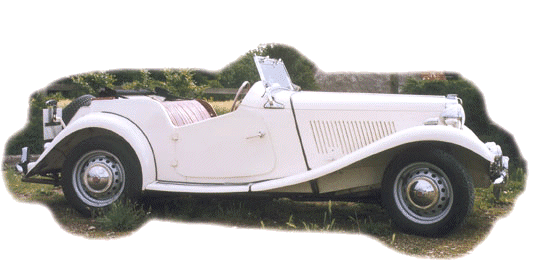
Generally, mechanical components are robust and engines, gearboxes and back axles last well and if necessary can be repaired but again this will be at a much greater cost than more modern MG.
Restoration
Rebuilds can be a major undertaking, as the TD body tub is made from an ash frame clad in steel panels which are fixed in place with steel pins. The whole body assembly is then mounted on top of the steel chassis. The timber frame was not treated when the cars were new so some rot in the frame is inevitable. To rebuild a TD often requires completely dismantling the car in order to replace the timber frame and renovate the chassis. This type of complex refurbishment is likely to require specialist services and skilled labour which can be very expensive. The good news is that body frame parts and steel panels are available and can often be repaired. Replacement chassis frames are not readily available but they usually survive quite well and can be repaired or straightened if necessary. Leather seats and trim items can be replaced but may have to be specially made. When viewing a car to purchase it is important assess how much work is required and how much it will be necessary to spend to complete the car.
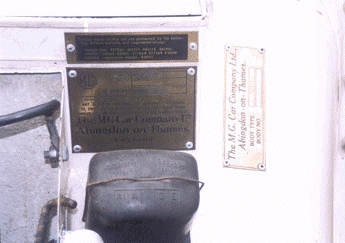
Chassis and engine numbers are situated on the bulkhead inside the engine compartment
Traditional appeal
The TD has the traditional good looks of the pre-war MGs but is underpinned by relatively modern mechanical components. This combination produced a sports car with lively performance, a comfortable ride and good handling characteristics. On the right road the TD is a delight to drive with a positive feel that really does inspire confidence, so that however long the journey, the actual driving of the car is beguiling all the way.
Richard Ladds