MGF/TF hood jamming
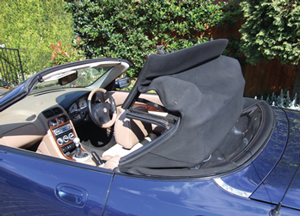
Many MGF and a growing number of TF owners experience problems lowering their hoods. This is when the hood locks up about half way down and will not go any further. The first two images display this condition and also where the lockout occurs, which is between the metal header rail and first cross spar on the hood frame.
The hood frame is equipped with the two longitudinal material web straps that connect between the header rail and the rear most cross spar above the rear window. The intermediate spars are also connected and this strapping ensures the spars are retained in the correct position when the hood is raised. Looking at the section of webbing between the first and second cross stays rear of the header rail will reveal two sections of cross hatch stitching and this is where the ends of a section of elastic is sewn to the blind side of the strap. The purpose of the elastic is so very simple, to provide a light rearward pull on the first cross spar as the hood is lowered to avoid the frame lock up. Unfortunately all the time the hood is raised the elastic is under tension and after a few years it weakens and then doesn’t have enough pull to move that first cross spar when the hood is lowered.
1 Typical Hood jammed in partial lowered position
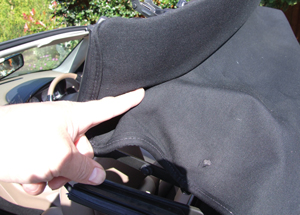
2 Finger pointing to the header rail jamming against the first hood cross stay
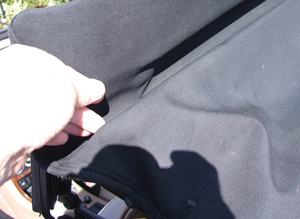
3 Even with a small manual movement of the first cross stay the hood lock is avoided
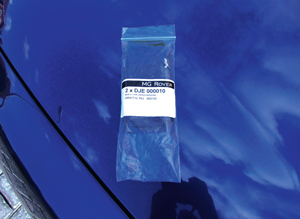
4 The MG Rover additional elastic strap kit and…
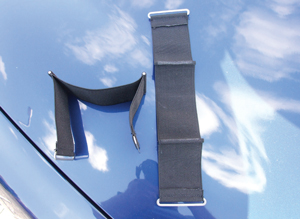
5 …the two straps that are in that kit.
This is a simple problem to overcome, initially by employing the additional hand action of moving the first cross spar rearwards when lowering the hood, which costs nothing. A more complete solution is to replace the elastic, but there are a couple of considerations, the main one is not to add anything that can then be seen as a lump in the hood when it is in the raised position.
Replacing the elastic is possible, but actually sewing in the elastic is going to be awkward so finding another form of fitting would be beneficial.
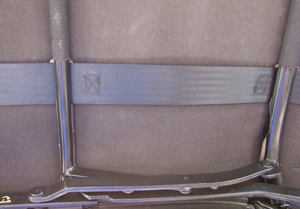
6 The original webbing showing the cross stitching where the original elastic is sewn to the webbing
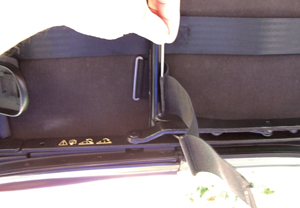
7 Feed an end of the new elastic strap around the stay and remove the steel pin from the pleat
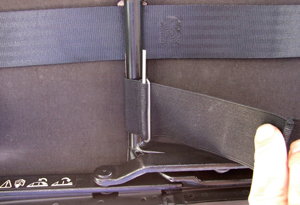
8 Squeeze and feed the pleat through the buckle at the end of the strap, then feed the steel pin back into the pleat
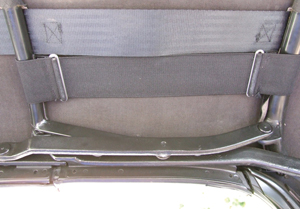
9 The assembled strap fitted to both hood stays
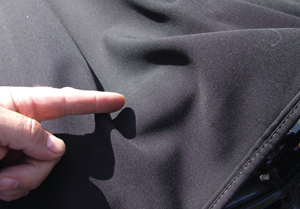
10 Note that the new straps create more ruffling of the hood material when the hood is folded
This problem was recognised by MG Rover as a neat replacement elastic kit was made available under part number DJE 000010. The design is clever since it uses a simple fixing method with a sewn in metal buckle at the end and a little way in is a sewn in pleat that has a steel pin pushed into the pleat. This needs no special fixing or changes to the car.
The new straps fit between the first and second cross spars and to the outside of the webbing straps where their ends can be pulled around the spars. It is easier to fit to the second (rear) spar first then stretch to the first spar and the hood needs to be partly lowered whilst doing this. The hood frame will need to be chocked or held by a second pair of hands (the preferred option) so you do not have to stretch the elastic too much yet still have access room that is not available when the hood if fully lowered.
Fitting is a case of removing the steel pin and then feed the end of the strap around the hood stay. Then squeeze, push and feed the pleat through the end buckle and I found that once an end of the pleat was through and the steel pin could be partly inserted it was a case of easing more material through and pushing the pin along bit by bit. Once it’s fully in the pleat the steel pin is too fat to pull back through the buckle and will be held tight by the elastic. The result is a simple, secure, rattle free fixing. Repeat for the other end on the other stay, with a touch more difficulty since you have to stretch the elastic and hold it whilst fiddling the pleat through the buckle, but once done you just line the new strap next to the original webbing. Finally do the same on the other side of the frame with the second strap and the task is complete.
When the hood is lowered the strong elastic pulls the first hood stay back as originally designed and hood lowering process becomes a one handed operation. You will notice that the hood material does ruffle up more because of the new strap and so you will have to watch this and reposition the material if needed. MGOC Spares currently have the straps DJE000010 in stock.
Roger Parker