MGs Join European Protest
MGs Join European Protest
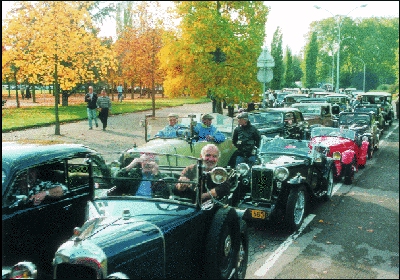
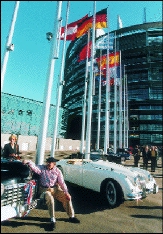
 Europe’s first major political gathering by classic car owners brought Strasbourg to a temporary standstill on October 26th. The purpose of this political rally – dubbed “Pour le devenir d’une passion (‘for the destiny of a passion’) by FIVA – was to lobby the European Parliament to exempt historic vehicles from End of Life Vehicles legislation, which could make it illegal or prohibitively expensive for owners to keep unrestored vehicles or spares cars. Despite only a few weeks’ notice cars of every age and value gathered, including MGs from the Thirties to the Seventies. It seemed as if the entire classic car movement of France, plus much of Luxembourg, Belgium, Germany and Holland, with representatives from Britain, Italy and Spain, had risen to the cause. Three weeks before, the organisers had anticipated 200 cars; at two weeks, expectations had risen to 400; by one week before they hoped for 600 and, on the day, over 1000 historic vehicles assembled. Cars from an 1898 to 1980s Trabants, Citroen 2CVs and Renault 4s there, pre-war marques including Bentley, Bugatti, Delahaye, Delage, De Dion Bouton, Georges Irat and Hotchkiss. Veteran cars, Vintage cars, post-Vintage, classic, historic – trucks too – joined the parade.
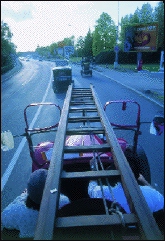
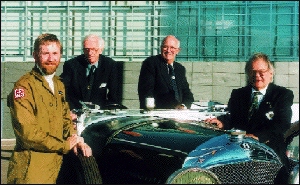
The Strasbourg police did their best to close the roads for the parade of cars to drive five miles to the Parliament building; even the 1898 Millot drove all the way. Among the Luxembourg participants was a Jaguar XJ12 towing a part-dismantled Midget on a trailer, bearing banners saying “Dechet dangeroux? Sans Pardon?” (Hazardous waste? Unforgivable?’). Also from Luxembourg was a smart MG PB; dozens of later MGs -As, Bs, Midgets – from all over Europe took part. British solidarity with FIVA was shown by a select band of enthusiasts driving in convoy from England to Strasbourg, organised by FBHVC Chairman Geoff Smith.
 The End of Life Vehicles (ELV) legislation has been going through the complex European Parliament legislative process all year, as part of a wider Waste Directive. The ELV Directive was intended to provide for a more environmentally sound disposal of scrap vehicles and better recycling of components. Old scrapyards and back yards full of mouldering vehicles, leaking oil and contaminants into the ground, were targets, as were motor manufacturers for making cars hard to recycle.
 A complete lack of understanding of the inherent environmental benefits of restoring rather than scrapping cars, led to legislation that could have a disastrous effect on the European classic car movement. Local legislation has already been introduced in Germany along similar lines, and a few enthusiasts have already had cars stored in their gardens forcibly removed and scrapped and been fined as well. Extraordinary new legislation is planned in Germany under which inspectors will be able to enter garages to inspect ‘restoration projects’, and confiscate them if there is no evidence that the restoration is proceeding. Meanwhile, cars are being dumped in woods and lakes as hard-up Germans discover it now costs £400+ to have them scrapped.
The International Historic Vehicle Organisation led moves to include an exemption in the European legislation for historic vehicles, with the definition “a historic vehicle or a vehicle of value to collectors which was manufactured more than 20 years ago and which is stored in a sensible and environmentally sound manner, either ready for use or stripped into parts.”
 This exemption was accepted and added to the legislation by the European Parliament. However, the legislation then had to be approved by the Council of Ministers (one from each member state of the EU), who threw out the exemption. Their argument was that historic vehicles have a value, and are therefore not waste; theoretically true, but totally subjection – this argument failed to provide any legal protection for historic vehicle owners persecuted by unsympathetic authorities. Lord Montagu, President of the Federation of British Historic Vehicle Clubs, received assurance from the UK Government that historic vehicles would not be treated as waste here, but this position could always be reversed.
FIVA, the Federation Internationale des Vehicles Anciens, decided action was vital to get the exemption reinstated. The IHVO suggested that a paragraph be inserted in the preamble to the legislation, along the lines of “of course, historic vehicles are not waste and are therefore not included in this legislation” – the Council of Ministers had indicated that it might accept this. But the preamble is not law, and the FIVA believes that nothing short of a specific legal exception will do: hence the call to lobby Strasbourg on October 26th.
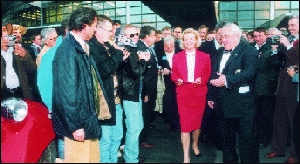
Selected vehicles from each country formed a vanguard at the main entrance, while FIVA officials collared passing passing MEPs for friendly briefings: all showed support for the cause. The President of European Union, Nicole Fontaine, emerged to receive a 22,000-signature petition from French enthusiasts; after a photo session, she was treated to an impromptu run on the 1898 Millot, having expressed incredulity that it worked at all.
This demonstration of the strength of the old car movement, warmly received by MEPs and Strasbourg residents alike, should help to influence the reinstatement of historic vehicle exemption in the ELV directive; now it is up to the Council of Ministers to accept it too………
 |
 |