Petrol for the Classic MG
Few classic MG owners will be unfamiliar with the Leaded/Unleaded debate and nothing has changed since our last feature on the subject ‘LRP – RIP’ in November 2002’s EMG, just prior to the demise of LRP (Lead Replacement Petrol). LRP was only ever a ‘fill in’ fuel for an estimated four years after the 1999 demise of true Leaded from sale. The fact is that LRP has only recently vanished from forecourts (in the UK) during 2005/6 so many newer readers may have missed the previous coverage.
Time never stands still and normal road fuels have continued to develop in line with improvements with modern petrol engines. One positive aspect is the growing range of genuinely high-octane fuels now available. However, other changes tend to create more problems than benefits for the classic engine and the biggest one is the volatility of modern fuels and the greater reaction to heat take up.
It’s always been the case that a car is designed and built to the standards of its era and this is even more apparent with engines. The move to standardise catalysts in 1993 and ever tightening emission levels, plus the pressure on designers to make engines produce more power, use less fuel and be cleaner, means there have been more significant changes in fuel make-up to match these design changes. This has produced a widening gulf between the classic engine design and the fuels available, leading to a significant number of running problems.
Let us now run through a few of the common problems…
Carb Fuel Leaks…
This has always been a classic SU problem, noticeable when you first switch on the ignition (electric fuel pump) or start the engine (mechanical fuel pump) and the engine runs very lumpy, often spluttering to a halt along with a very strong petrol smell. Fuel will be leaking from the overflow pipes, a standard feature of almost every SU carb and certainly common to any in the H, HS and HIF series.
This problem is nothing new, but with modern fuels the problem is becoming more widespread. A sharp tap on the float chamber or side of carb body with a wooden or plastic screwdriver handle or similar is the time honoured ‘first aid’ treatment and it may still work. However, one of the newer problems is the type of ‘gummy’ residues that are left when modern fuel is allowed to evaporate in the float chambers between periods of use (which need not be that long with modern fuels). This is especially evident over winter periods when the MG is in hibernation. These ‘gummy’ deposits do no favours to the operation of the carb’s float valve and can also block the main jet flow path too.
These dried fuel deposits are very slow to be dissolved by fresh fuel and in some cases can seem completely insoluble. However, they melt on sight when sprayed with ‘Carb’ or ‘Choke’ cleaners that can be bought for under £5 from virtually any motor shop.
Removing the float chamber lid on an H or HS series SU carb is simple, but not so with an HIF series, that requires the whole carb to be taken off from the manifold and inverted to access it. However, if this residue problem is present this is by far the most effective solution. When spraying carb cleaner to remove any residues you should remove the dashpot, piston, etc to allow spraying down the main jet back to the float chamber and around the visible interior. The dirt removed will be quite obvious and perhaps surprising. Make a specific note that inverting a carb ALWAYS demands proper cleaning of the float chamber as this movement will disturb other ‘sandy’ type corrosion deposits from inside fuel tanks, often not the car’s but the petrol station forecourt storage tank’s. These corrosion deposits illustrate the benefits of fitting a fuel filter on cars that do not have one.
When working inside the carb float chamber it is always worth the time to examine the float valve and seat not just for dirt and residues, but wear too. The clearest indicator to wear is on the brass conical seat of the needle valve in the form of a visible ring mark. If present renew the valve and seat on the carb(s) fitted to the engine, one, two or three. Logic also says to examine the float and make sure it’s not punctured and that the float height when refitted is correct. Most carbs now have a plastic moulded float with preset float height, having replaced the earlier design of floats, which had a metal connection riveted to the plastic float which may have allowed fine setting of the height, and many people get this wrong, plus the float could leak past the rivets. All carb spares are stocked by MGOC Spares.
Sudden Poor Running and Non Starting Hot Engines…
This often occurs when enjoying a drive on a warm day and you come to a forced stop in traffic and then endure a period of stop/start movement for more than around five to 10 minutes. As time passes the engine idle speed slows, becomes lumpy and it’s necessary to keep blipping the throttle or holding it open otherwise the engine stalls. Then the engine begins to misfire, progressively worsening to the point that if the traffic situation doesn’t allow some running at 30mph or more the engine may stall and prove impossible to restart and simply won’t fire until a cool down period of around 20 to 30 minutes has elapsed. This is usually a very clear indicator of engine bay heat getting into the fuel system, vapourising the fuel and causing vapour locks restricting fresh fuel flow.
Older MG fuel systems are simple affairs, fuel from the tank is pumped on demand to the carbs and then fed to the engine in a measured way dictated by the fuel height (set by the float position) the main jet and metering needle. When the cars were built fuel was less volatile and whilst these heat related problems were experienced in some hot climate areas, cold climate areas didn’t suffer. However, with hotter summers and much greater congestion, these heat problems are becoming more common.
While the car is being driven at anything more than around 30mph the airflow through the engine bay keeps temperatures down, plus the fuel flow is greater as the engine uses more. The combination of both means that fuel temps never normally get high enough to cause a problem, even with modern fuel. However, as soon as you slow down the airflow reduces and under bonnet temperatures rise, often very quickly if suddenly caught in a motorway queue, when generated heat from higher speeds has yet to be dissipated. At the same time the engine needs less fuel so fuel flow also slows significantly. An increase in static heat and more time for it to percolate into the fuel means that the critical vapourising temp is soon reached and then the engine won’t run at all.
Classic MGs have a number of decidedly unhelpful design features and the most obvious one is routing the ultra hot exhaust manifold in close proximity to the intake and fuel system. To compensate a heat shield was fitted between the hot exhaust and carbs with additional pieces of heat resistant material on the exhaust side of the shield, but these often degrade and fall away with time. If this has occurred then noticeably more heat energy will penetrate the fuel system and this shortcoming is in addition to the inadequacy of the standard heat shield.
Exhaust manifolds also have an impact the original cast iron manifold is slower to radiate heat compared with the performance orientated tubular steel types. There is some advantage wrapping the tubular steel manifolds with exhaust wrap, although wrapping a cast iron manifold is not recommended as it may cause cracking. In the same way that an exhaust wrap helps keep heat in the exhaust manifold, similar materials are available to wrap fuel lines to reduce heat penetration. Fuel pipe wrapping will be helpful to a small degree, but the carb bodies offer the biggest surface area for heat to be absorbed, and reduction of heat transfer here is the target.
Assuming the standard heat shield is in full working condition then the next biggest source of heat is that which is radiating up from the lower part of the exhaust manifold and which can rise unobstructed straight into the carb area. Creation of an additional head shield from polished alloy or stainless steel that connects to the bottom edge of the standard shield and goes under the carbs will reflect and deflect at least some of this heat getting into the carbs and can delay the rise in fuel temperature.
The next consideration is the engine bay airflow which can take on heat usually from the radiator, and as this moves around the engine bay it will come into contact with the carbs and transfer some of this heat into them. Reflective material, rather like cooking foil, attached to parts of the carbs can be used to reflect back some of this heat. However this sort of modification can look tatty so the next suggestion should be better.
Some export MGCs, 1.6 litre S series engined MG Maestro, all MG Maestro and Montego Turbo petrol models had reasonably effective carburettor cooling fans. These all come from the period of less volatile leaded fuel and were geared to coping with the heat that would be taken up in the period immediately following the engine being switched off. These fans would be active once the engine was switched off and usually either thermostatically controlled or operated by a simple timer. The actual fans were often small-modified heater fans that blew ducted cooler ambient air at the carbs to keep heat problems at bay. Not a 100% cure but quite significantly effective. Whilst these original configurations were catering for the heat soak that occurred in the period immediately after the engine was stopped there is no reason why such a system could not be created to operate when a certain temperature is reached, like MGF engine bay cooling fans for example.
Obviously reducing the engine running temperature and ensuring that the cooling system is as good as it can be, plus having the engine set up for optimum efficiency is a great help in reducing the onset of these problems, but it will not prevent them altogether. One suggestion would be to use a lower rated thermostat of 74 degrees C. Another would be to change the air filter design and ensure that all air the engine breathes is drawn from a cooler part of the engine bay or ideally air at ambient temperature. This is a subject I have raised before in terms of achieving better torque and power, but while drawing in cool air on the carb body is very beneficial in hotter weather, this is not always wanted in cool autumn and winter conditions where it could promote icing of the throttle.
Running-on…
This is another growing problem and is usually the result of a series of small conditions that cumulatively have a larger impact. Generally the tried and trusted methods of reducing this condition are still perfectly applicable, correct ignition timing, mixture setting, lowest comfortable idle speed and if needed an anti run on valve. However, modern fuels do increase the tendency for running-on and many owners who have had their cars for years are experiencing these problems for the first time.
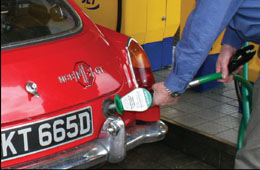
One effective method of reducing running-on is to use a higher octane fuel or raise the octane of existing petrol by using an additive. The Castrol Valvemaster Plus additive provides an effective lead replacement function and additionally the ability to increase the octane rating by towards two points. Note there is a law of diminishing returns with this when it is reasonable to expect the biggest increase when adding the booster to 95 octane fuels, but something less if adding it to a 98 octane fuel, but still achieving a useful gain. Remember that the MGB was initially recommended to run on fuels with a 100 rating in decades past, or the old 5 Star petrol.
Wider Fuel Choices…
In the UK and certainly some other ‘developed countries’ there is an ever-widening gap between the currently available fuel make up and that which is ideal for the classic car. The loss of lead from petrol is one consideration that comes to mind, yet this is a comprehensively over rated problem as there are various proven methods to live with the lead free aspects of modern fuels.
As lead in fuel had both lubrication and anti knock functions, consideration has to be given to both aspects. Fortunately engine development in recent years has seen designers exploit the benefits of greater efficiency that comes from ultra high compression ratios and with it ever higher-octane fuels have arrived to make the most of these changes. Recalling the early 1970s with my MGB I would periodically fill the tank with 5 Star (usually on pay day) and enjoy boosted engine performance. In those days just before the first fuel crisis of the 1970s I was not so concerned about fuel consumption! The rest of the month I had to ‘slum it’ on ‘ordinary’ 99 octane 4 Star and felt a less responsive engine with it.
By the time that leaded petrol vanished at the end of 1999 it had dropped to 97 octane, leaving two basic choices (in the UK) mainstream 95 octane unleaded and a higher octane, higher price, unleaded at 97, titled Super Unleaded. B series engines would often complain on 95, but run acceptably on 97. In the background a small quantity supply of genuine leaded has remained, but at a significant price premium from a very limited number of outlets, usually privately owned petrol forecourts. On the plus side the fuel was rated at 99.7 octane.
Limited supply and around a 25% price premium doesn’t help the mainstream MG owner, so with the arrival of 98 octane (minimum rating) fuels from Shell (Optimax) and BP (Ultimate) on a nationally available basis and not too much more expensive than base unleaded, many took notice. Of the two, Shell Optimax has gathered more B series engined car owners support than the other, with general comment on their engines running noticeable smoother than on other fuels. Optimax has been superseded by V Power and at that time saw another one point octane increase to 99.
Recently we seem to have entered into a flurry of fuel related product releases, with Tesco offering 99 octane fuels from some of its sites. Unfortunately Tesco have recently attracted publicity for its contaminated fuels. However, older engines can shrug off such issues like water off a duck’s back, and here classics have one over on modern cars.
More recently BP created Ultimate 102, which as the title suggests is a 102 octane fuel. This latest release has been surrounded with quotes of independently verified gains in power on a number of different engines over normal pump fuels. The presentation looks very attractive until the price is given (£2.42 per litre compared to an average price of around 95p per litre for 95 octane – at the time of writing). Adding Castrol Valvemaster Plus or other octane booster to sensibly priced higher octane fuel would go a little way to bridge the octane gap to the 102 octane and be an awful lot cheaper.
The fuel issue is far from stable and the future will bring gradual evolution of both engines and fuels, hand in hand with each other to comply with legislative and other requirements. This will leave the older classic engines even further behind and needing more innovative adaptations to continue running well. We will always be keen to hear from members who have suffered and then overcome these problems with specific modifications that they feel they can share with others.