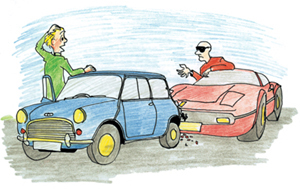
So you thought you were insured?
So you thought you were insured ?
A recently survey revealed that around ten percent of drivers are uninsured. I believe that a much greater percentage of people think that they are insured but are not. This article may raise a few eyebrows, it may provoke much discussion but the fact is, many people happily drive believing that they are insured when they are not. The following examples are based on actual cases, the names have been changed.
“She thought she was covered…”
Freda drove her husband’s car and was a named driver on his comprehensive policy. She didn’t need her own as she often borrowed her sister’s old Ford Escort. It wasn’t worth much and her sister didn’t bother adding Freda to her insurance as Freda said she was insured on her husband’s comprehensive policy to drive other vehicles third party only. She was involved in a minor bump and discovered that she was uninsured when she took the documents to the police station. The often offered facility to drive other cars, not belonging to you, not hired to you etc is extended to the policyholder only. The police report that a great number of people are driving uninsured and believe themselves to be covered because they believe that the driving other cars benefit applies to named drivers. It doesn’t. Some insurers have reduced benefits in order to lower premiums. Policies that used to offer a driving other cars benefit see it withdrawn at renewal. It’s important to check.
“Tried to get a lower premium and didn’t mention modifications….”
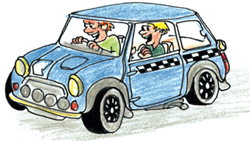
John was 20 years old at the time. He bought a Mini for £1000 and it looked nice, it had a stage 2 cylinder head, bigger carburettors and flared wheel arches. John was a student at university and when he had his accident, he was crossing a bridge over a river. The temperature was slightly above freezing and John didn’t appreciate that whilst the roads were clear, the wind chill under the bridge had turned the damp surface icy. John lost control, hit the side of the bridge and bounced back into the path of an oncoming car. He hit it head on. Two of his passengers were injured and John suffered damage to his spleen. The occupants of the other car had slight injuries, both cars were wrecked.
The insurance company rejected the claim. John had discovered that insurance was expensive so he persuaded his father to register the car in his name and to insure it with John as a named driver. The loss adjuster visited the family home and used his skill learnt in the Police to discover that the car was really intended as John’s main form of transport. Dad had a car, so did Mum. The Mini was obviously for John’s main use. The insurer paid compensation to the injured passengers and for the damage to the car John hit. They paid nothing to John for his injury or for the loss of the Mini. The insurer then sued and each month, a payment is made from the family to the insurer.
Thousands of young people buy their first car and persuade their parents to insure it in their names with them as named drivers. They are wasting their time. When John’s father said that the Mini was standard and not modified, he wasn’t to know that John had forgotten to mention the changes to the car. That too rendered the policy invalid.
“But I’m covered to and from work…..”
George was employed as a lorry driver for a national firm. He now works for an agency and sometimes he will collect lorries from one depot, on other days, he’ll be at another haulier’s premises. He has an MGF and it’s insured to and from work and for social domestic and pleasure. He leaves it in a safe area guarded by wire and security officers. But George didn’t realise that when he answered “Yes” to the question, “Do you want cover to and from one permanent place of work”, that it would matter that he would be driving to various places. If he had an accident to or from one of those places of work, George would not be covered. To be properly covered, he would need to call his insurer and have his cover extended. What makes this case look silly is the fact that George’s wife is a named driver. If she takes George to wherever he starts work and picks him up, the insurance is valid. Driving to and from work means to and from one permanent place of work.
“Ok we cheat a bit but doesn’t everyone…..?”
Bert and Fred are unemployed and they draw benefits. They also do a little bit of light decorating work for their friends and neighbours for cash. Bert bought a small van last year, he’s a keen fisherman and has lots of rods and tackle. Now that Bert and Fred have ladders, paint and brushes to transport, they use Bert’s van. They realise that their insurance is probably a bit dodgy but they cannot declare themselves for business use whilst fiddling the dole. The van’s only insured third party anyway and the possibility of a prosecution and a small fine appears remote compared with the money they were saving on income tax. They’ll know how much their fine will be very soon. They are due in court next month.
“I am insured, aren’t I….?
Simon drove a van too. He was employed as an electrician and was given a van to use for work. He was covered to drive to and from work and on the business of the policyholder. One weekend, Simon and his friend popped over to Calais to buy some cheap beer and wine. A policeman noticed that the car was heavily weighed down and when Simon produced his documents he realised that Simon wasn’t insured for private use. We discovered that if Simon was self employed or working for a business that he owned, he still wouldn’t have been insured for private use if the policy specified “only driving on the policyholder’s business.” A grey but important area. The reason insurers specify that, is because they don’t want their risk extended to regular shopping trips or the van used to transport a few friends and a case of beer to the cup final. The injury claim for five burly lads badly injured after being thrown around in the back of a crashed van could be very expensive.
“I wasn’t cheating, I don’t want people to know I was banned for drink driving.”
Carol was horrified when she was arrested and later banned for drink driving. She was only a little over the limit and she considered herself as a decent law abiding person. She often needed to hire a car for travelling on company business and she knew that when her ban expired and she got her licence back she didn’t want the shame of Doreen, their local car hire clerk knowing that she had been convicted of a DR10. Before she went to court, she declared that she lost her licence and she applied for and received a duplicate. At court, she handed in the duplicate and patiently waited for the licence to be returned. She wasn’t stupid enough to use the original to drive whilst banned. When she got her licence back, she hid it and she used her clean original document to hire cars. Sure enough, she had an accident. The insurer checked her licence status with the DVLA and realised that she hadn’t disclosed the DR10. The insurer had to pay for the damage to the third party that Carol hit, they refused to pay for the three month old car that she had written off. The hire company successfully sued her and she was lucky not to be prosecuted for fraud. If she had declared the DR10 the hire car insurer may or may not have accepted the risk, but they would have had a choice and may have imposed a higher premium.
“Come on chaps, you can squeeze in the back….”
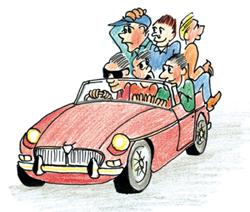
Ted’s MGB was his pride and joy and one balmy summer evening he offered a lift to three friends. No matter that the MGB is a two seater, Ted took the roof off and two passengers perched themselves on the rear parcel shelf. Ted took the bend at the bottom of the hill at his normal speed but the car didn’t respond as usual. It swung to one side, the back came round and the car left the road and demolished a fence. The two passengers in he back were thrown out and landed in a garden. They weren’t badly injured, they were lucky they landed on the grass. The MGB was a write-off but Ted wasn’t too upset, he had an Agreed Value policy. The police arrived, Ted was charged with careless driving, the officer said that a more serious charge could be considered and Ted’s insurance paid for the fence to be repaired. They refused to pay for his MG as it was his fault that the car crashed having been incorrectly loaded and that the carriage of the two extra passengers had contributed to the cause of the accident. If you carry children in the back of an MGB, beware. If you place children unsecured by a proper retrained seat in the back of an MGB, even on a GT rear seat cushion, you could have a problem. A small, light child may not be considered to add much weight or cause a handling problem, but a couple of heavier, older children might be regarded as causing a handling problem.
“He thought that he had a great idea….”
Donald bought an MG privately and he wanted to drive it home. His wife would drive their car back.. He knew that his insurance covered him to drive vehicles not belonging to him third party only so when he handed the seller his cash he said “Look, I’ve paid for the car but I don’t want to be the legal owner until 5pm. It’s 3.00pm now. For the next two hours it’s still your car and at 5.00pm it becomes mine.” Smiling at his brilliance, Donald drove home but he crossed a traffic light as it turned red and a policeman demanded his documents. He produced his licence, the MOT and his own insurance papers for the family car and pointed to the car’s receipt and the fact that the car didn’t legally become his until 5pm. The policeman was unimpressed and booked him. Donald discovered that an IN10 as a licence endorsement is as bad as a DR10 when it comes to arranging insurance.
“She was apparently quite pretty too…..”
Paul worked in a department store. He drove his car to the railway station, left it there and commuted to work by train from his modest bedsit. He didn’t have many friends in the area so he decided to get a part time job in a pub on the corner of his road. One evening he was chatted up by a young lady and she requested a lift with a promise of more than a cup of coffee. At closing time he walked back to his bed sit, collected his car that was parked outside and he drove back to the pub, picked up the girl and drove her home. A traffic light turned to red, the car in front stopped, so did Paul but the driver of the car following him, skidded and hit his rear, the driver then reversed and drove off before Paul had a chance to take his registration. When Paul completed the accident report form, he truthfully revealed his part time occupation working in the pub. The insurer said that he should have declared his part time occupation. They paid the claim after we appealed to the underwriter. They weren’t obliged to. That particular scheme excluded full or part time employment in certain higher risk occupations including the licensed trade.”
“But it’s private property M’Lud…..”
Dad was proud of little Billy. Billy loved cars and begged Dad to let him sit on his knee and turn the wheel whilst Dad operated the pedals. Billy was only five and Dad knew that he mustn’t let Billy “drive” on the road. One day the family visited a stately home. It wasn’t a busy time and the car park was almost deserted. There was lots of space to play and Billy begged to drive. Dad pulled him onto his lap and they spent a happy five minutes going slowly around the car park. When they stopped Dad was surprised to have a stranger tapping his window. An off duty police officer wanted to tell Dad not to be irresponsible. Dad told him to clear off and mind his own business. This wasn’t a wise move and if he had taken the friendly advice he would have been better off. The off duty bobby suddenly became officious. Dad was booked, his court case was interesting and expensive and Dad discovered that an area that is privately owned but open to public access is just as public a place as the highway.
Forgot your MOT?
Many people believe that if a car’s MOT has expired, the insurance is immediately invalid. That’s not true though an insurer can walk away from a claim if the MOT has expired and especially if it can be shown that the car is in poor condition and would not have passed an MOT. But if you forget to renew your MOT by a few days because you genuinely forgot, then if your car was stolen, you would still be paid. The quality of the insurer, the influence of your broker and the size of the insurer’s goodwill would be a factor.
“The car has a current MOT so I’m driving it home…..”
Henry knew that his MOT was due to expire and he also knew that if he took it for a test within thirty days of the expiry, he could have the new certificate extended. But the car failed and the tester declared the condition dangerous and unsuitable for the road. He cautioned Henry not to drive the car. Henry refused to comply. He stated that his current MOT would cover him. He was wrong, the tester reported Henry and the police stopped him and cautioned him for driving a defective vehicle. If he had been involved in an accident, the insurer would have paid the third party, they would not have paid for Henry’s damage and they would have successfully sued him for their costs.
“But the salesman told me to say that……”

Sarah was upset with her renewal premium. It had gone up too much in her opinion so she telephoned some of the people who advertised in the classic press. One insurance clerk seemed keen to sell her a policy and when she revealed that she was a professional singer in a band, he asked her if she had always been a singer. It turned out that she was a qualified nurse and the clerk suggested if she was still a qualified nurse he enter that occupation down rather than singer as the premium would be much lower. Sarah agreed, she had been employed as a nurse until quite recently and had only just started singing full time. In her mind and that of the clerk, she was still qualified.
Sarah was driving home one night and she was giving a lift to the group’s drummer. She skidded on some ice and rolled the car, she was unhurt but the drummer broke his arm badly. The drummer claimed for loss of earnings and there was the potential of a larger claim because the group was about to land a valuable recording contract. The insurer then discovered that Sarah had lied about her occupation. She denied it and stated that the broker had induced her to say that she was still a qualified nurse. The insurer paid the drummer’s expensive claim and told Sarah that they would be suing her. Sarah was worried that she’d lose the house left to her by her grandmother. On legal advice she sued the broker but his clerk denied that the conversation about her being a singer had taken place. She had to mortgage her house to pay her insurer back.
I felt sorry for Sarah, this rogue clerk was known to tell people that claims, endorsements etc weren’t important and that they didn’t need to mention them. The trouble was Sarah couldn’t prove that the clerk had lied.
Stolen or What?
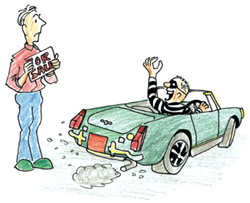
If you let a potential buyer drive your car and he drives off never to return, you cannot claim under the theft section of your policy. Your car hasn’t been stolen, you have literally given the car away. Likewise if the buyer pays you with a bounced cheque or a counterfeit banker’s draft. You might think that car has been stolen, but the law does not agree.
If you leave the keys in the ignition whilst paying a petrol bill or popping in to do an errand and someone steals takes your car you might wonder if the insurance would cover you. Recently a chap stopped outside his house and left his engine running whilst he dashed inside to get something. An opportunist thief drove the car away. The insurer refused to pay on the grounds that the insured hadn’t taken proper care. The Ombudsman disagreed and the insurer had to pay. To protect themselves from this kind of theft, some insurers are inserting a clause into their policies that state that if the car is left unattended with the keys in the car, the theft cover isn’t in force.
You’ll sympathise with this chap too, we did but the insurer was adamant – for awhile.
“But I’m covered against theft on my policy……”
Nick’s car was being repaired so he borrowed Tom’s car. Nick was insured to drive other cars third party only on his policy. Tom was insured third party, fire and theft on his. The arrangement was that Nick would use the car and then leave it parked near to Tom’s office ready for him to collect and drive home. When Tom arrived at the specified place, the car wasn’t there. He phoned Nick who confirmed that he’d left it as agreed. They realised that the car had been stolen. Tom claimed under his policy for the theft and explained the circumstances. The insurer decided that the car was last in the control of Nick who had parked it. As far as they were concerned, the car wasn’t insured against theft as Nick wasn’t a named driver on Tom’s policy and that when the car was stolen it was technically in Nick’s care. Legal advice indicated that the insurer was legally right to withhold payment. I called the underwriter and explained the circumstances. He agreed that if Nick had returned the car to Tom and Tom had parked it, the claim would have been paid. The underwriter considered our request to pay and he took into account the level of business that we were placing with his company. The claim was paid.
Hit by a driver who turns out to be not insured? You are still covered.
Many people do not realise that insurance for third parties and other people’s property cannot be invalidated. If someone lies about their licence, their history, claims and endorsements, if they do everything necessary to invalidate a policy then they are still insured as far as third parties are concerned. The insurer is bound to pay out for injuries and third party losses. But he doesn’t have to pay for the policyholder’s loss. The insurer can also claim against its policyholder and if the policyholder has assets, these may be sold to repay the insurer. If the policyholder has no job, no house, no assets, the insurer may not bother to sue but if there are assets, then the insurer will sue and may bankrupt its customer.
If a driver doesn’t have a current insurance policy, the insurer who will pay for any third party claim is judged to be the last insurer known to have covered that driver. If your policy with the insurance company expired last year and you had no intention of renewing hoping to get away with it, your last insurer is obliged to meet the third party claim even if they cannot reclaim their costs back from you.
If there is no last insurer, (because you have never been insured) then the third party claim will still be met and the money will comes from a fund provided by contributions from all the other insurers. But if you have money or assets, these will be taken to repay the fund. That’s after you’ve paid your fine or come out of prison!
If you think that you might have forgotten something that the insurer could reasonably claim to want to know about, then you should declare it. It won’t necessarily increase your premium but if you lie or forget, then you might as well not bother taking out cover in the first place. If you believe that you don’t have to declare an old driving ban, then think again. Your insurer might not load your premium for a five year old DR10 but he’ll want to know about it. If you are in any doubt, mention it. The Rehabilitation of Offenders Act is quite confusing and may not apply with regard to insurance. You might not have to tell a prospective employer that you served six months in prison for fraud or burglary six years ago but you are obliged to advise your insurer. To quote Michael Cain “Not a lot of people know that.”
To protect themselves from customers who lie or “forget”, some brokers tape every telephone call and store the tapes for posterity. Others make a printed note of the caller’s information and they post it to their customer who has the opportunity to correct any errors or omissions. A person cannot claim weeks afterwards that he told the clerk about his accident, endorsement, ban or whatever, the details of the risk are on record. We do actually come across people who “forgot” that they were once banned for drinking and driving. One chap said that he forgot that he was banned twice! As the last ban was five years ago, he didn’t think he needed to mention it!
If you have any queries or are unsure about your insurance, contact your broker. If you have bought your insurance from a direct insurer, call their help desk. If you have any similar examples to those shown above and others might benefit from reading them, please send me an e-mail or write. (rochebentley@mgownersclub.net )
Now where’s my policy, I want to check that wording again.