MG ZT 160 1.8T
Much has been written on the MG ZT and ZT-T, and ‘Enjoying MG’ has not been remiss in the exposure it has given to these two models. However, generally there is very little written on what was until recently the entry-level model, the ZT 160 1.8T. Now there is another rung on the model ladder in the form of the 120 which comes in under the 160, but as we not yet had any experience of the 120 we will refrain from comment until that model has been tried. Recently the Club was able to have a week with a ZT-T 1.8T, plus a much shorter period with a ZT saloon version.
Initially when the ZT range arrived there were two models, a 160 V6 and a 190 V6 showing less actual differences in reality than the 30Ps power difference indicated. This meant that the 160 V6 was a strong alternative to the 190 as it displayed little difference in performance and had higher gearing so was in some respects a more refined cruiser and was cheaper. However, on the downside, fuel consumption was also similar and more importantly, CO2 emissions were quite high.
The CO2 emission and connected personal taxation issues have provided all manufacturers with a strong incentive to provide alternative models that are more fuel efficient, showing reduced CO2 and fuel consumption. In the case of the Rover 75 and MG ZT ranges the KV6 in either 2.0 or 2.5 litre form doesn’t offer any favours for those having to consider the economics of running a company car. To remain competitive in this area clearly a change was needed and the first forced induction version of the 4 cylinder K series engine was the answer, known as the 1.8T.
Arriving first under the bonnets of Rover 75’s, the blown and intercooled K series engine delivers 150bhp (the same as the 2.0 KV6) and a very respectable 215Nm of torque at a commendably low 2100rpm (40Nm more than the 2.0 KV6). The MG version that followed shortly after for the ZT and ZT-T saw the same torque but gained a small but useful extra 10Ps.
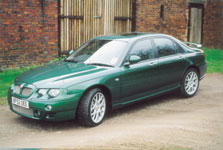 ZT 1.8 160 Turbo |
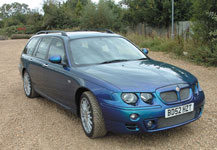 ZT-T 1.8 160 Turbo |
Now there are two four cylinder 1.8 litre K series engines (only fitted to ZT range) delivering the same 160Ps but they are as different as chalk and cheese in their character and power delivery. The VVC delivering its 160Ps with urgency and revs whilst the 1.8T engine delivers it in a more ‘laid back’ style. Plus a 51Nm torque bonus for the 1.8T tells its own story!
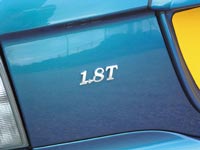
The 1.8T character is well matched to the ZT and ZT-T models, as they are not lightweight sports cars. At just under 1600kgs they are the lightest ZTs, no doubt helped by the engine which weighs just 114kgs, some 40kgs less that the already relative lightweight KV6. It is interesting to see that the 160 V6 remains available and to differentiate between the two 160 models, that do not carry any numbers in their badging incidentally, you find a 1.8T badge to the left of the rear number plate on Turbo models. Two 160 models does seem to unnecessarily complicate the situation but in reality there are greater variations than the spec sheets initially indicate.
In previous reports on the ZT and ZT-T we have made comment on body, trim, equipment, seating position and the wide option range, and in the 160 1.8T this is carried over unchanged. What we had not sampled before, for any length of time, was the changed suspension settings that were introduced in the summer of 2002 across the whole ZT and ZT-T range. This is a softer specification, introduced in response to customer request, with the previous rather firm (too firm for many) specification applied from the range’s introduction in July 2001 now moved to the option list, and designated as ‘Sports Suspension’. The changes are significant and quite noticeable with normal driving now benefiting from greater insulation from road irregularities, yet the good communication with the road surface remains. In extremis, information to hand indicates that the softer suspension retains about 90% of the ultimate grip of the original specification. To be quite honest, road driving does not show any significant change in that respect and only track day enthusiasts are likely to want or need the firmer suspension; most owners will be far better off with the standard suspension.
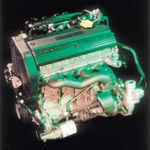 1.8 K series engine with turbo |
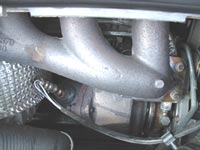 Neat Turbo installation |
One thing that can be felt is the effect the lighter engine has on the steering response. Turn the well-weighted steering wheel and the car responds immediately, turning in sharply and cleanly and is unmoved by almost all lumps, bumps and holes in the road surface. Feedback is good with the driver being able to feel and understand exactly what is happening between the tyres and the road. The wheels and tyres are incidentally the same 7.5″x18″ hairpin alloys with 225/45 ZR18 Michelin tyres as seen on the V6 models. Bearing in mind the size of these wheels and tyres, the ability of the suspension to be able to deliver such a good ride is commendable.
Whilst talking wheels and tyres it is worth making a specific point that a spare wheel is not part of the standard equipment. Clearly some members buying new cars are completely missing this point, although it is shown in the brochures, and is an industry wide practice. In place of the spare is an Instant Mobility System. A space saver spare wheel and tyre is a £50 option that includes a jack and wheel brace and a full sized spare and non-directional tyre is a £250 option. Locking wheel nuts apply across the range and so the adapter is always part of the standard equipment.
The main discussion area around the 1.8T model has to be the engine and the fact that it is the first forced induction version of the K series family. The 1.8 litre K series engine has been beefed up and uses stronger liners and other internal changes to ensure reliability is not reduced by the effect of adding the Allied Signal (Garrett) GT20 turbo. Compression is reduced from the naturally aspirated 10.5 to 1 to a more modest, but still high for a forced induction engine of 9.2 to 1. The pistons are uprated as are con rods. The exhaust manifold is made from cast stainless steel designed to provide reliable resistance to the 1000 degree C temperatures that can be generated. Other changes include an oil pump uprated to increase flow by 12%; a modified lower bearing ladder with a return port for oil flow returning from the turbo and a pressure sealed throttle body. It is also worth mentioning that there are many additional small changes that make the prospect of ‘dropping one of these in a ZR, MGF or TF’ far from a simple proposition. Not impossible, but not simple nor cheap!
It is interesting to compare the turbo engine characteristics with the 160 V6, especially since the maximum power is not only the same, but the 1.8T engine produces its maximum power at 5500rpm, some 750rpm less than the V6. Torque figures also display interesting factors, with the 1.8T losing the torque battle by some 15Nm with 215Nm. Of more significance though are the torque peak rpms with the 1.8T delivering 2100rpm and the V6 1900rpm higher, showing the 1.8T in a very good light.
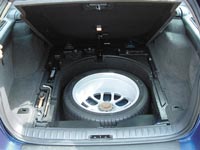 Spare wheel is a cost option, not a standard fit |
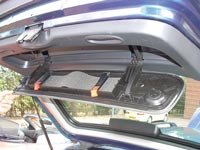 Special compartment for warning triangle |
The 1.8T engine is mated to the same manual Getrag gearbox as used with the V6 engines in both 160 and 190 form. The internal close ratio gear cluster is the same for all Manual front wheel drive ZTs, but the final drive ratio provides for different overall ratios for each model. In the 1.8T there is a 4.1 final drive ratio resulting in fifth gear delivering 22.2mph for every 1000rpm of engine speed. For comparison the 160 V6 uses a 3.9 ratio and the 190 a 4.4 ratio.
So much for the technical niceties, the crunch time is when you actually drive the cars and sample all those other factors, most of which simply do not appear on specification sheets. It is only then that you can make up your mind. Those coming from a V6 engined car will immediately pick up on the 4 cylinder engine’s harsher starting and running characteristics. Well insulated the engine may be, but there is no hiding the vast difference between a 4 and 6 cylinder engine. The firing order dictates that! However, those coming from a 4 cylinder car will simply not notice this and probably comment on how well insulated the engine seems. Pulling away from standstill the difference between 4 and 6 cylinder engines seems greater yet, specifically as at very low rpm the 1.8T engine lacks the torque of the V6. Accelerate, and as soon as the revs close on 2000rpm there is a marked progressive increase in torque and the 1.8T now starts to pull very well.
Once on the move the low rpm where peak torque is generated means the engine is usually well into the boost area and provides torque and power instantly on demand. In fact, this actually shows how effective the turbo match is to the engine as there is no real delay between throttle movement and firm acceleration, as long as the engine rpm is above 2000. Even below that, the response is sharp, unlike the ‘on or off’ turbo-powered cars of the past, just that there is less torque until revs rise.
It is also quite clear that the acceleration delivered is very strong and the rate of progress is better than the 160 V6, a point confirmed by the official performance figures which show the 1.8T to have a useful advantage in both standing start and ‘in gear’ acceleration. The latter being of far more use in real road driving!
The 1.8T continually felt quick, not a fast motor, but a quick car in normal driving conditions. It also didn’t feel any slower than a number of ZT 190 models experienced over a period of time, and it seems clear that care had to be taken with setting the power, torque and gearing of the 1.8T to ensure that it did not embarrass the 190. Clearly, it will not take much tweaking to push the power of the 1.8T to levels above the 190, but at this time what effect this would have on the 1.8T’s engine reliability is unknown. It seems logical that market pressures will ensure that this engine is developed further and spread into other models, although there are official denials of any such moves now. This will leave a hole that is certain to be filled by a number of well-known specialists!
The forte of this model though, is in lower running costs compared to all other petrol models. During our test period it was easy to see significant fuel savings over the V6 versions and average consumption during the week’s tenure with the ZT-T was over 32 mpg. This is all the more respectable as that week’s mileage was amassed by a number of different drivers, whose exploration of the car’s abilities will have used more fuel than would the case with normal ownership. The official combined average fuel consumption works out at 34.9mpg, nearly 5mpg better than the 160 V6 and a figure that should be eminently achievable by the average owner on a diet of mixed road and traffic conditions. CO2 emissions are much lower for the 1.8T with just 193 against 225 for the 160 V6. This is unfortunately not low enough to place the 1.8T in a lower road tax class, however business users will benefit from a reduced tax bill for the 1.8T as a company car. For all buyers the 160 models currently fall within insurance group 15D and come with a Thatcham Category 2 security status.
I see the deciding factor on which way to go being how the balance between V6 smoothness and its quality feel can be accepted against the better economy, and in company car situations the lower tax burden. I am a private buyer and run a KV6 engined ZS and enjoy the refinement of the V6, but move the goal posts of petrol prices and tax changes and it is great to have such a choice and still drive behind the Octagon. Decisions, decisions.
Roger Parker