MG TF – first drive
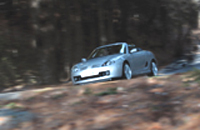
Overview
Roger Parker test drives the MG TF
The MGF, production of which has now ceased, was for most of its life Britain’s best selling soft top sports car. To not only reach such a position, but also maintain it, clearly shows that the car must have many positive attributes. When originally tested by the motoring press the car was well received and placed in an elevated position. This was just after BMW had bought Rover and, as we all now know, Rover and MG in particular, was about to enter a period of ‘suspended animation’ particularly since the MGF could hurt sales of the BMW Z3. The formation of the MG Rover Group in 2000 has been followed by many positive developments to all the existing products and divergence into high profile areas like motorsport. A pressure release not dissimilar to opening good Champagne!
The start of 2001 saw the first inklings of movement for the MGF with the announcement of a new entry level 1.6 litre model and a new high profile limited edition range topper, the Trophy 160 SE. The changes created for the Trophy model clearly showed the direction that the designers were thinking along. Stiffer, lowered suspension, meaty braking and a boost to the power of the VVC engine. A style statement was also made with bright new body colours. However, welcome as these developments were it was clearly never going to be enough to stave off the competition. What was needed was a radically updated car.
Looking at the MGF and specifically areas that directly contribute to the driving experience, several areas were clearly in need of change. First is the suspension, which most will be aware is Hydragas, a system developed from the Metro and Rover 100 range. This suspension has been both an attribute and an Achilles heel. An attribute in that it was able to provide a class leading ride with superb handling. An Achilles heel because the ride height was subject to far too much fluctuation, which in turn affected suspension geometry. Thus, it was too easy to have an MGF’s suspension setting out of specification rather than in, which did handling no favours at all. ‘Freelander’ ride height being a common complaint, exacerbated by the need for a brand new car’s suspension to be set 10mm higher than normal to allow for settlement in the first 3000 miles.
Having identified this shortcoming there is then the issue of sorting it out! With the demise of the Rover 100 in 1998, the MGF remained the only production car using Hydragas suspension. Considering a change to specification with the relatively low volumes for just one model range made the prospect expensive. This partially opened the door to a change to more conventional steel springs. What opened that door fully were the strides made in steel spring and damper suspension systems, so that now ride and handling levels to exceed the Hydragas set up could be achieved, with the attractive prospect of lower production costs. The resulting suspension changes lose nothing and gain much and are balanced with changes to steering and bodyshell rigidity.
Aerodynamic issues also featured strongly in the product planners’ ‘In Box’. Ask any MGF owner how he views his car’s stability at motorway speeds or in crosswinds and a common response is ‘twitchy’. Ask owners who have fitted additional aftermarket front aerodynamic splitters how things have changed and the universal response is ‘brilliant’. If nothing else this showed an area where some development would pay dividends. The Trophy model started the process with lowering plus front splitter and rear spoiler. These provided useful improvements to both aerodynamics and performance and generally owners find they increase stablity. The MG TF has taken these improvements on board, and moved on several stages further!
The MG TF replaces the MGF and comes in four distinct models, TF 115, TF 135, TF 120 Stepspeed and at the top of the range the TF 160. Whilst the badges on the rear of the car will only include the numbers for the 160 models, they do give a close indication to the power outputs of the K series engines. All engines have seen improvements in efficiency, power or CO2 levels. It is interesting to note that the model hierarchy is listed as 115, 135, 120 and 160 in terms of overall equipment and trim levels, rather than the usual logical progression via power outputs.
When the specification of MGTF is examined in some detail, what becomes clear is that a methodical and wholly sensible approach has been taken in respect to the changes that have turned the MGF into the MG TF. History has many cars that have flopped in face lifted form, take the Granada to Scorpio. On the other hand there are also some which have continued to thrive in face lifted form and the MX5 is a good example.
Mention of MX5 is pertinent as it, the MR2, and other similar cars have over recent years raised the game in the affordable 2-seat sports car sector of the market to much higher levels. The MGF has in the same period seen just one minor face lift. This was in September 1999, when the 2000 model year (2000MY) cars appeared. Only the introduction of the Steptronic auto/semi auto option providing anything new. For the MGF to have maintained strong sales in the face of such competent competition reflected well on its basic design.
The new shape of the MG TF has been evolved not just in the styling studio, but with many hours work in the MIRA wind tunnel. The result of the changes now sees not only the new look, but from some very high-speed experience, a considerable improvement in stability.
A directly related area to aerodynamic issues is one of engine and the engine bay temperatures. It is widely accepted that the two side vents on the MGF, although giving access to the engine bay are actually doing little to encourage air to enter the engine bay, at least not without the help of an electric fan. The reshaped MG TF now sees a marked improvement of airflow through the engine bay with a significant reduction of engine bay temps and better control of engine temps.
Irrespective of the depth of change in aspects of the car hidden from view the primary concern has to be with how the car looks. With the MGF the curves created a ‘friendly’ shape, some call it feminine, with a clear face dominated by the big round silver headlamps along with hints of previous MGs. Changing this very dominant feature was always going to be risky on the one hand, but without a significant change to the look, the TF may not be seen as all that different. The classic example of such a failure to visually differentiate is seen with the MGBGT and MGBGT V8 where just 3 V8 badges and a set of wheels was virtually all even the most observant would see for your extra 25% extra investment!
It is fair to say that within MG circles the styling of the MG TF has generated much comment. With seeds sown by the X80 styling, introduction of which incidentally is being put back a few months, the new MG brand look with the distinct headlamps and double horizontal slatted grille generated some quite ‘warm’ comments. However, now the TFs have been seen and photographed much more, the temperature of the exchanges has already cooled and the majority verdict is coming down in favour.
Even with the wider circulation of different photographs, it is still clear from experience of over 20 cars that any final assessment of the styling should be deferred until after you have seen a few examples in different colours and various trims. Seeing the car in the ‘flesh’ provides you with the opportunity to notice the depth and structure that is hidden from view in the photographs, particularly in the blacked out areas of the lower front grille and the lower rear section. However, these do show that the optional fog lamps provide a clear aesthetic improvement, irrespective of whether they are to be used only in poor visibility or all the time as a ‘furry dice’ style statement! It is also worth noting that when a reflective number plate is fitted this does have quite an influence on the overall look of the car, front and rear, as does the use of the ‘bright kit’ option.
The headlamp units now include indicator as well as headlamp and parking lamp functions. The inclusion of a clear indicator (orange bulb) at the inner most point means the lamp assembly is wider and more teardrop shaped. This gives a meaner look to what is the ‘eye’ of the car. This is enhanced by the use of individual ‘projector’ lamps for dip and main beam, together with a small parking lamp located above the main lamps.
At the opposite end of the car the rear lamps catch the eye, yes they are the same shape as the MGF, but the indicator, and reverse lamp sections are now clear instead of smoked, a small difference that is so obvious when directly compared to the MGF. The boot panel is also clearly different with the inbuilt rear lip incorporating a standard high level brake light. Unlike the MGF’s multi bulb high level brake light, the new unit uses LEDs. This gives a faster reaction time, but is not guaranteed to improve following driver’s reactions, which may be an issue as a consequence of the brake revisions!
The rear bumper mirrors the styling of the front, with a blacked out lower section. New exhaust has larger bore tailpipes and retains the twin pipe style of the MGF. This provides a neat styling balance between front and rear, especially when the optional bright kit is fitted, as bright mesh is included for the rear as well as front and side vents.
Rear wings may seem the same but they are in fact new panels that include the full sill section. This new panel contributes towards a significant strengthening of the body as well as being clearly different in the sill and side air intake area. The side view gives a clearly lower and more dart like perspective.
Inside the car presents a very familiar environment to any MGF owner. Changes here are mainly in trim materials and colours, although detail changes are apparent to instrument faces and heater controls. A wider range of interior options does allow for an even more personalised interior to be specified, and will be much wider with the introduction of the ‘Monogram’ options. Seat positions remain the same and basic body dimensions prevented any alteration to provide additional interior space. Therefore, if you didn’t fit in the MGF then I am afraid that you will not find any real differences. However, this writer’s 6’2″ 17 stone frame was perfectly comfortable, and has been so in the MGF. An added benefit of the cockpit’s basic dimensions being unchanged is that an MGF hardtop will fit, so if you make the change from F to TF you can still use your hardtop.
The inclusion of three new interior dash material colours, with original Ash continuing and Walnut being dropped, along with alternative colour hoods does provide a way of creating a quite different interior. Add this to new body colours, Le Mans Green or XPower Grey, and the sum of these limited changes adds up to much more than the individual parts.
Driver controls are carried over and whilst some fore/aft steering column adjustment would have been useful to add to the available up and down range it isn’t present. The space restriction continues to dictate that larger drivers will have little opportunity to drop the column from its highest position. If some fore and aft movement could be provided then this would probably help ease this restriction. Clearly, the 20 million pound expenditure budget for MG TF didn’t extend this far.
Another addition that would have been useful is a variable speed wipe on the intermittent position. MG Metros have such a facility and I miss this! Others comment on the screen washer function needing a separate action to activate the wiper as a criticism, but I feel that this can sometimes be a positive advantage.
I do not feel the same way about the lack of heated washer jets as standard equipment. Any MGF owner who uses his car in winter will testify this not being a luxury, but a necessity. There is no engine heat up front to assist defrosting frozen jets! Another point gained from three years living with an MGF is the need to use the key to access the boot. This is a real inconvenience, especially in a busy street when picking up a passenger with shopping. The spare key approach may provide ‘insurance’ for those prone to shutting keys in the boot, but it is one easily and simply bettered by an electric option! Having had an aftermarket electric boot release in my car for a couple of years now I can vouch for the benefits. The system, which incidentally uses a Metro central boot locking motor, is active only with ignition on and handbrake applied so security and safety issues are taken into account.
Air condition was fitted to the test cars, whilst this was effective at providing a cool blast in warm conditions, however what was not acceptable was the intrusion of the unit itself into the passenger footwell.
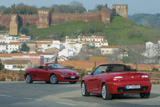
The choice of the TF moniker for the MG TF is also something of a discussion generator! Some hold the view that a previously used designation should not have been used again, whilst others disagree. I have little doubt that this will become a talking point in MG history for many years to come. I certainly do not see the discussion affecting the sales of the MG TF.
From MG Rover’s perspective, they made their decision to use a name for which they have the rights to use. They have their own brand policy that dictated a double letter moniker and there is a recent precedent to the revival of a previously used designation, as in the Rover 75.
Using the T as the primary letter hints at the possibility of future MG sports cars being designated T series with saloons continuing with Z. Certainly, the choice of F as a second letter is wholly appropriate to provide a clear lineage to the fact that the TF is derived from the F.
MG tradition is also being updated in the manner of the first VIN numbers for the MG TF. As most MG enthusiasts will be aware the first production versions of a model range started with 0251, in recognition of the Abingdon telephone number. However not all MGs have carried on that tradition and others use a variation. ZA Magnette and TF Midget of the 1950s carried 0501 start numbers in recognition of the BMC HQ telephone number being 1501. Today the MG Rover HQ telephone number ends in 2101 and so the first MG TF bears the number 0101.
At the evening briefing during MG Rover’s Press International launch the cynical and blinkered view of an element of the press came shining through with, ‘isn’t this just a fault fixing exercise?’ This inane query followed an afternoon spent driving on testing routes which clearly displayed the car’s capabilities. Such a comment is almost insulting from the clear inference that the 77,000 plus buyers of the outgoing MGF, me included, must be stupid, as no sensible person buys a faulty car. The MGF was and remains an excellent sports car but the TF is even better.
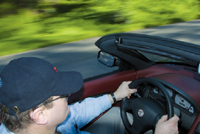
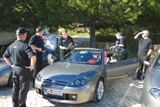
Dry, sunny, warm and wind free days are ideal conditions for any soft top sports car with the hood down. This weather greeted us in the Algarve, Portugal, for the first driving experiences of the MG TF. An impressive line up of TF 135 and TF 160 models awaited us, in Red, Silver, Le Mans Green and Xpower Grey, each with a number of trim and mechanical options. In another car park was a long line of Trophy Blue cars, most impressive.
This ideal climate was in stark contrast to the weather back in the UK, having left behind the worst winter storm for 10 years. I had deliberately chosen to use my 1999 MGF to drive to the airport in order that I would have immediate before and after comparisons between the MGF and MG TF. On that drive I felt perfectly happy with my car and its slightly non-standard specification.
Our first TF experience was with an XPower Grey 160 model with the optional Sport Pack 1 suspension, so it sat 10mm lower than the other cars. The imposing dark grey paint contrasted well with the light grey hood and Grenadine (Deep red) interior. This model also sported the optional fog lamps and bright mesh kit together with the familiar MGF optional windstop.
The routes were well planned with full maps and detailed instructions. However, it took a few minutes to adjust to co-ordinating the left foot with right hand for gear changes. One thing that this did show straight away was that even with the clumsiness of adjusting to gear changing with a LHD car the improvements to the gearchange were obvious and assisted in the familiarisation period. The change was shorter, lighter and more precise, although still slightly rubbery. Improved yes, but not yet as good as the rod change FWD cars using the same gearbox.
Another factor that I noted as unusual, but which may be due to the LHD arrangement, was that this was the first car of the MGF family that I was able to drive with the steering column in a position slightly lower than the uppermost position. It will be interesting to compare this to a RHD car.
Immediately the engine is started there is a more purposeful sound, not dissimilar to the Trophy. That car’s exhaust I described as providing all the sound you want from a sports car without the noise of some aftermarket systems. Unlike the Trophy though this exhaust doesn’t have to be fitted by the dealer, it comes as standard from the factory. Throttle response is also very, very sharp and the engine appears to have lost some of the sewing machine whines.
On the move the greater structural rigidity is immediately obvious, whilst the MGF is commendably free of scuttle shake some movement can be detected at times. The other very noticeable aspect was the ride quality for what was the sports suspension. As this was effectively a development of the Trophy 160 I was half expecting a similar very firm, somewhat uncomfortable ride. Nothing of the sort, firm yes, with a hint of being joggled on less smooth surfaces, but none of the tooth loosening that the Trophy provided on too many surfaces. This wasn’t because the roads were any smoother for the TF, far from it! It was also interesting to note that this TF had covered a similar mileage to the Trophy example I am comparing it to, so no difference there either.
As the route took us further from traffic and urban habitation the roads became more interesting, and so were some of the sheer drops a few inches from the edge! The precision of the steering and the higher gearing means virtually no need to ‘plat’ the arms or ‘push/pull’ the steering wheel. Steering weight and feel is superb, although I still suspect that some will find it a little too light. I certainly had more than enough ‘feel’ coming back through the wheel to know exactly what was happening between the tyres and road surface, which was often covered with a dusting of sand.
The brakes, which to remind you are the 4 pot large diameter front discs with ABS, are sensational, being able to wipe speed off with the merest touch of the pedal. I was impressed with the Trophy brakes when I first tried those, although they could be over sensitive and a little front biased, something you soon adapt too. The TF was less sensitive and clearly more work is being done at the rear. Very much a case of taking a very good aspect and making it even better. This is one car where you really need to be aware of the proximity of traffic behind you as I have little doubt that the stopping abilities could really find the braking limits of that following vehicle!
The 160PS engine also felt stronger than the Trophy, although it is rated the same. Throttle response was very good and enabled a degree of the car’s balance to be controlled via the throttle, and traction was exemplary even when the inside rear wheel was struggling for traction because of sand-covered roads.
The twisting hilly roads provided the classic driving pleasure in a car with so much feedback and competence. Driving such roads requires a sensible approach, as whilst it is easy to get from A to B quicker, and the car is clearly capable of carrying that extra speed quite easily, you still have to account for the local donkey taking its owner for a walk down the middle of the road the other side of a tight bend!
At the other extreme high speed cruising was also very comfortable. At speeds around 200kmh the stability of the car was arrow like, even when road surfaces were variable and dips and humps caused the suspension to pitch between the two extremes of travel, the car remained unruffled.
There were a couple of severe sections of roads under repair where parts of the surface had been removed, and just sand replaced it. The resulting couple of inches drop in, and jolt out, did test the suspension and result in an unpleasant metallic noise as the steel pan under the centre of the car grounded. Other than this rather severe test, there were no negative comments to make with this car and the lowered suspension. A variety of other road surfaces, including cobbles, were taken with ease.
Pre driving expectation was for results comparable with the Trophy. Certainly with the historical background of Hydragas showing an ability to provide better than average ride quality the expectation for this Sport Pack 1, suspended TF was for the coil over to be in the same league, it was not. The truth is that the TF was streets ahead, and I would go as far as to describe the Trophy as almost crude in comparison.
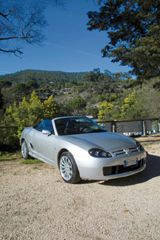
The other model that I want to describe is the Core TF 135 of which we drove a couple of examples. The only fitted extra being 16″ 11 spoke wheels. The same positive feel in respect of rigidity, suspension control and steering response was present, as was the high speed stability on one section of motorway.
The engine modifications for the 135 create a much more sporting engine character with a desire and response for the engine to push right to the engine cut out. This in contrast to the previous 1.8i engine spec, which is clearly asthmatic above the 5000rpm area. One worry I had about moving the power band up the rev range was the potential for losing flexibility at lower rpms which are in the normal day to day operating band. I was pleasantly surprised by the very flexible nature of this specification from very low rpm right to the cut out.
Cams with a sporting profile may have been used, but there is no step in the rev range to show it. I was also concerned that the use of the lower overall gearing of the 160 would also impact and make the car somewhat buzzy. This too was an unfounded worry with the engine perfectly happy to sit in a high gear behind a tractor or spin through the rev range. Clearly the only down side of this model is the slightly worse fuel economy and CO2 emission rating.
In the information supplied by MG Rover the 135 is described as almost a match for the replaced 145PS VVC. This is a perfectly accurate statement and whilst it doesn’t have the sheer grunt or response of the 160 it is certainly not overshadowed by it. In cross country runs the 135 would never be far behind a 160.
The other point of note is that the standard suspension with the extra 10mm ride height over the Sport Pack 1 equipped car was certainly better able to cope with the road repair sections, and some of the drops found at the side of the road when you want to stop for photographs or at a roadside orange stall. Just like the performance of the 160 over the 135, the standard suspension was also not in the shadow of the sportier specification. It would be fair to say that anyone buying a standard spec TF will be getting a car with the handling close to the Trophy.
As a matter of interest, and in anticipation of the sceptics who will doubt the ride height of the new cars being lower than the MGF, I took a tape measure with me. This caused a few scratched heads and weird comments as I went round as many cars as possible and measured the ride heights. I found that these were all between 355 and 358mm so they were certainly as described. The couple of Sport Pack 1 equipped cars I measured also confirmed that they were running that extra 10mm lower. With so many MGFs actually sitting higher than the nominal ride height the difference with the TF will be significantly greater than the on paper figures will have you believe.
The brakes on the 135 examples driven, which carry over the MGF 240mm discs, but with optional ABS fitted, were able to demonstrate the extra work being done at the rear and were clearly better than an MGF. The initial feel was a little dead compared with the big brakes, but the reserve was re-assuring with good retardation. There was certainly more than enough braking power for the performance available from this specification, but as a personal choice I would choose to have the big brakes and ABS for the clear advantages. I feel that the most important system in the car should have all the power available and the extra £850 needed for Sport Pack 2, which proves this is money well spent.
We did not have the opportunity to drive in the dark so can’t comment on the claimed increased lighting performance from the Projector headlamps. However, during photo opportunities in daylight when the headlamps were on the output was clearly very strong and this bodes well for night time performance.
On return to the UK and driving home in my F, it was patently clear how much progress there has been with MG TF. Owners of the MGF who take test drives will see what I mean, those without continuous experience of the MGF may not see this as readily.
The MG TF has made serious strides forward and is once again in the same relative position it was when the MGF appeared in 1995. The recent appearance of very obvious and high profile advertising by the MG TF competitors is a sure sign that they feel the TF is a very serious threat to their sales. The MX5 may well ‘Zoom Zoom’ across your screen, but what’s that car in front? Is it a Toyota? No, it is an MG TF.
MG Rover has developed a reputation of delivering many things in hitherto unknown time scales, by industry standards, and delivering MG products that are sharp, sporting, quick and a pleasure to drive. Their latest offering does nothing to hurt this image, only enhance it.
(For fuller details refer to the MG Rover official brochures)
This section spends some time with the changes seen on the MG TF, it is not exhaustive but where no specific mention of a change is made then generally the previous MGF specification is carried over.
Powertrains…
All engines feature common enhancements to improve power, CO2 emission or both. They have all adopted an alloy throttle body of improved design over the previous plastic version, and all engines now operate with MEMS 3 using distributor-less ignition with coils mounted above the spark plugs. All models also have a new larger alloy radiator for improved cooling.
TF 115 carries over the very sweet revving 1600cc engine from the MGF with a useful increase of power from 112PS to 116PS, just 4 short of the previous MGF 1.8i specification. The ‘combined’ fuel consumption figures shows a 1.4mpg improvement to 39.8mpg, and CO2 emissions show a slight drop too, down 8 to 169g/km. The gearbox and its ratios are also carried over from the previous MGF 1.6i.
TF 135 takes over from the previous MGF 1.8i with different camshafts and the 160’s alloy inlet manifold, larger (52mm) throttle body and remapped ECU to produce 136PS. Unfortunately the extra power takes its toll and ‘combined’ fuel consumption shows a 1.4mpg loss, but still manages a creditable 35.6mpg average. CO2 emissions too suffer slightly with a 7g/km increase, which unfortunately takes the car from band C to band D for UK taxation purposes. Another new feature of the 135 is the adoption of the lower overall gearing of the TF 160, which incidentally is the same as the outgoing MGF VVC and Trophy 160 models. The 6.5% lower overall gearing more than offsets the slightly reduced torque at lower rpm found with the new tune.
TF 120 Stepspeed carries over the previous spec 120PS 1.8i engine, with some changes. Whilst there is no power or torque increase shown and the car’s weight increases slightly with the same gearing, there are slight improvements to both fuel consumption and CO2 emissions. Fuel consumption is improved 1.1mpg to 33.9mpg and CO2 emissions are dropped 7g/km to 199. This is still the most costly version to run in fuel terms but there isn’t quite the gap there was between it and the manual cars. The familiar automatic/semi automatic CVT transmission is carried over and the familiar gearchange or steering wheel controls are present. The transmission is the restricting factor to any increase in either power, torque or engine speed.
TF 160 carries on from the MGF Trophy 160 SE, using a production version of the limited run Trophy engine spec. This was first seen in the MG ZR 160. The 160 is the only TF model using the VVC (Variable Valve Control) system and with modifications to the porting, induction manifolding and exhaust systems. This engine not only achieves the same power level produced by the Trophy 160 model, but it also manages to show both improved fuel consumption and CO2 emissions.
The VVC system in this application is now showing the benefits of investing in such a system, with a real efficiency bonus and being able to have power AND better fuel economy. Not only is it producing the highest power and torque, but also has the widest rpm range between maximum torque and maximum power. The good news doesn’t stop there with fuel consumption second only to the TF 115 at 37.6mpg, which incidentally is actually 2mpg better than the TF 135! Additionally CO2 emissions have been improved by a very creditable 11g/km over the Trophy and 10 over the old 145PS VVC. This had a double bonus in that the resulting 179g/km places the TF 160 in tax band C.
The gearbox on all models is carried over from the MGF. In manual models this is the proven PG1 series gearbox with a common set of internal ratios but with two different final drive ratios, 3.9 for the TF 115 and 4.2 for the TF 135 and TF 160. All manual models have a modified gear shift, still using cables, with a shorter lever throw and a smoother action. The Stepspeed CVT (Constantly Variable Transmission) is carried over from MGF with no changes to ratios.
Suspension…
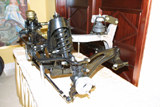
This is by far the most dramatic change and it is not just a simple replacement of Hydragas spheres with a steel spring. It is far, far more. One characteristic of the MGF was insufficient control of rear suspension movement, especially once cars had covered a few miles and suspension bushes were more compliant. This induces incidence of rear steer that most drivers would feel as instability. Again in the same way as aftermarket splitters help aerodynamic stability so replacement bushes in firmer materials help control the suspension movement better. This again gave a clear view where improvements would shine.
The reality is that changes in the rear suspension are quite considerable and only a couple of parts are retained from the MGF configuration. To fully appreciate this new ‘work of art’ requires viewing the photo of the demonstration subframe provided by MG Rover at the launch.
Apart from the new towers to the subframe to accommodate the coil over damper units, the bottom of the coil over unit bolts to a new top arm. This cast arm with its new mounting positions provides different, and better, leverage ratios. Following the top arm to the hub assembly finds a familiar top ball joint on this assembly, which whilst the same base unit as before is now drilled differently.
The largest, and in my mind neatest, addition is the substantial cast iron arm that is fixed to a new anchor point on the front of the subframe. This follows S shape path rearwards before splitting into two to anchor at the top and bottom of the hub assembly. This arm provides control on the fore and aft forces trying to move the wheel, which induces rear steer, and due to its articulation doesn’t impose any variations to overall suspension geometry in the normal range of suspension up and down movement.
To finish these substantial changes are two new lower arms that attach to the bottom of the hub assembly either side. A short front arm fits in the same plane as the previous cast lower front arm of the MGF, but unlike the MGF this item is adjustable. From the bottom rear of the hub assembly is yet another, and very long arm which moves inwards and pivots from another new mounting on the subframe close to the centre line of the vehicle. This arm too is fully adjustable thus providing full camber and toe adjustability. The suspension bushes have been carefully chosen to provide excellent control yet reasonable ride and noise levels. The anti roll bar is retained, in a reshaped form to accommodate the changes.
Front suspension sees much less overall change, partially because it works very well to start with. The subframe received a new turret for the coil over unit and the new top arm takes advantage of altered leverage ratios. The anti roll bar is increased in diameter from 19mm to 20mm, which may seem a small change, but the actual increase in stiffness is actually quite significant.
Front suspension bushes are altered and the rear lower wishbone bushes have greater stiffness in their lateral plane. This is a change to aid steering and resist compression of the bush when steering loads are being applied.
The way in which the MGF carries the major components within subframes does give quite a degree of flexibility to alter much without having to look at a redesigned bodyshell. This because all the major loads are carried by the subframes. The altered positions and dimensions of the suspension units has demanded some changes to the body, so alas it would not be a simple retro fit of new subframes to an MGF for those contemplating upgrading their cars!
The front subframe also features additional cross brace stiffeners to aid its rigidity and both front and rear subframes are now bolted directly to the body, without any rubber bushes. This is a carry over from the Trophy model which pioneered the solid mounting principle for road use.
The changes to the suspension allows all MG TF models to sit 10mm lower than an MGF, sitting at its correct 368mm ride height. In addition there is an alternative specification suspension with different spring and damper rates that reduces ride height a further 10mm (Sport Pack 1). This incidentally then matches the Trophy 160 which sits 20mm lower than other MGFs.
I see a huge advantage for MG Rover and TF buyers from the new suspension. This is that the suspension when fitted to the car has a single fixed and non adjustable ride height. No need for an extra 10mm when brand new to allow for settlement, no need for dealers to adjust and risk getting things wrong, no fluctuations with temperature change and no risk of leaks. If there was nothing else new on the car this would still be a huge leap forward and at a stroke has removed the current biggest headache of the MGF.
Steering…
The electric power steering (EPAS) fitted to the MGF was another market leading introduction in 1995. In its first versions it was criticised for being over sensitive and lacking feedback. For the 2000MY revisions, there were changes to the EPAS control mapping that was intended to increase steering weight as speed increased and provide greater feedback. However, it was still oversensitive for too many drivers.
For the MG TF the mapping has once again been altered, but this time significant work has been done to the mechanical aspect. Primarily this is a change of steering rack and introduction of one with 2.8 turns lock to lock in place of the original that had 3.1 turns, the choice of ratio being in keeping with that which many using the MGF in competition seek to achieve. The package of changes, including the pivot bush alterations already mentioned, illustrates the depth and thoroughness that has gone into making the TF a more rewarding driving experience than the MGF.
Body…
This section is not about the aesthetic aspects but the technical and dynamic aspects. The look is something for the individual to decide whether they like or dislike, but behind the looks the shape of a car has to work in many ways, and the aerodynamic aspect is a primary one.
For the record the Cd and CdA of the TF in standard form is 0.36 and 0.62, compared with the MGFs 0.37 and 0.65. Add the optional ‘Sports Pack 1’ suspension kit, with the extra 10mm drop of ride height and the figures drop to 0.35 and 0.61, the same as Trophy 160 incidentally. What these bare figures do not show is other aspects of the aerodynamic gains for the TF, especially lift that sees very significant improvements, 28% being quoted. A 55% improvement is also claimed in the variation between front and rear lift. A good indicator for a more stable platform at speed.
Another aspect of the aerodynamics is the way in which air flows through the engine bay. It is widely accepted that MGF engine bay temperatures are generally too high and this has led to some engine related problems. The Lotus Elise, which uses the same engine and configuration has not seen the same pattern of problems. It is also generally known that engine bay temperatures on the Elise are considerably lower than the MGF operating in the same conditions. Mention of 20 degrees lower has been banded about in the past. With the TF there is a positive increase in airflow through the engine bay and average engine bay temperatures on the TF are now said to be 20% lower than the MGF, which is said to be an actual reduction of 14 degrees C.
In addition to the extra bracing applied to the front subframe, there are a pair of additional strengthening bars fitted within the engine bay, these are visible through the cover grille into the bay when you open the boot lid. There is additional strengthening also between the scuttle cross tube and floor pan inside the car.
Brakes…
Look through the front wheels of any model except the TF 160 and a hint of disappointment may show. Yes, the previous 240mm diameter brakes are carried over. However, because of the suspension changes brake performance has been improved on cars with ABS. This is because front to rear brake bias can be changed with the rear doing more work. The result is a claimed10% improvement which seems to be entirely feasible from driving experience.
Another development is the carry over of the mightily impressive Trophy 160 304mm front disc and 4 pot ‘AP Racing’ calipers, but now with ABS. These are standard on the TF 160 and an option on the 120 and 135 models, but not the 115. The calipers are still painted in that most attractive red. ABS incidentally, as a stand alone feature, is standard on the 120 but a cost option for 115 and 135.
Wheels and Tyres…
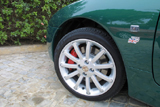
The familiar range of wheels seen on the MGF is carried over except for the Trophy wheel, the 8 spoke 15″ fitting being seen only on the 115. The 15″ square spoke wheels from the MGF Stepspeed are carried over for the TF 120, and are now standard fit for the TF 135 too. The TF 160 carries a new 11-spoke design 16″ wheel to cater for the larger dimensions of the 4 pot brakes. This wheel is used on all models where the big brake option is specified.
The other 16″ wheel designs, round spoke, square spoke and multi spoke as seen on MGF are all options for cars without the big brakes. There is also one more option for the TF and this is an ultra lightweight 11-spoke 16″ wheel, which is similar to the other 11-spoke 16″ fitment. This wheel comes in gunmetal grey (dark grey) as a simple wheel option for the TF 160 or as part of Sports Pack 3 for TF 120 and 135.
The lightweight aspect refers to a reduction of 3kg per wheel and this is oh so obvious when you pick up the standard 16″ wheel and tyre followed by the ultra lightweight wheel and tyre. However even as a simple wheel only option it is over £1500 extra so I think dieting would be more cost effective!!
Tyres remain with the familiar sizes of 185/55×15 front and 205/50×15 rear for 15″ wheels, and 195/45×16 front and 215/40×16 rear for the 16″ wheels. The 16″ covers remain with Goodyear F1, but now the 15″ cover has moved to Continental Premium Contact from the Previous Goodyear NCT 3.
The temporary spare (14″ steel wheel and tyre) is carried over from the MGF, but only where the TF has standard 240mm brakes. Cars fitted with big brakes come as standard with the IMS (Instant Mobility System) seen first on Trophy 160 models. A new option is the availability of a full size 16″ alloy rim and tyre but this is still a temporary spare and subject a 50 mph max speed.
Electrical…
Clear changes here are at the front of the car with the use of more efficient individual ‘projector’ lamps for both main and dip, contained in a new headlamp assembly that is covered by a silicone treated polycarbonate cover. This sounds good but it has to prove itself, and show its resistance to minor damage from stones and other daily hazards. Front indicators have been moved inside the same unit and a small parking lamp is incorporated above and between the dip and main beam units.
ICE is catered for by the adoption of the same range of Kenwood units first seen with the Z range of cars. The KRC 379R unit is fitted to all except TF 160 and does not have the best reviews because of unclear and difficult to use controls when driving. For the record, the TF 160 uses the KDC 5090R single slot CD tuner and none of the Kenwood units carry MG branding.
Interior and Trim…
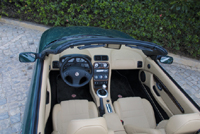
Main changes to the inside of the car come with trim materials. The MGF was pleasant enough cabin to live with, so development priorities were elsewhere. The introduction of three new main interior colours does provide the means to create a visually quite different feel, even if the shape and position of parts remains the same. Originally only Ash (dark grey) was available for interior colour as it is a universal and neutral colour. The 75th LE models saw a deep red alternative and then 2000MY saw a new option called Walnut (Beige).
For the TF Walnut is replaced with Tan and two other cost option colours are added, Grenadine (deep red) and Light Smokestone (light Grey). Seat materials also change in both pattern and colours with a wide range of options from the standard range and an even wider range of options to come with the introduction of the Monogramme options. The emphasis away from wood look options continues with a dark grey finish called ‘technical’ being standard. The wood look options are still available for those preferring this.
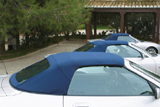
For the first time the full model range can have alternative hood colours, with black remaining the standard colour. There are blue, grey and green options, which with the right body colours make for a very impressive combination.