MGA Buying Guide
Buying Guides
Buying an MGA
Production History
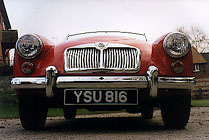
The MGA appeared in 1955 as a soft top two seater with a 1500cc engine and quickly proved to be a best seller, particularly in the USA. In 1956 a coupe version was offered with a fixed hardtop, wind up windows and very discreet outside door handles. In 1958 the production version of the MGA Twin Cam was launched. As well as the special engine the Twin Cam also featured Dunlop disc brakes on all four wheels and steel centre lock disc wheels. The twin cam engine offered outstanding performance from a 1588cc but required skilled maintenance; the timing in particular had to be accurately set and regularly checked.
In 1959 the pushrod engine in the MGA was increased in capacity to 1588cc and the car gained Lockheed front disc brakes along with other minor improvements. Although the Twin Cam went out of production in 1960, soon afterwards the factory offered the option of a De Luxe version of the pushrod 1600, featuring a very similar specification to that of the Twin Cam. The 1600 MkII featured an even bigger engine of 1622cc and was distinguishable by a new recessed radiator grille design and new rear lamps. In 1962 the 100,000th MGA, a 1600 MKII roadster, was produced and specially finished in metallic gold paint.
Construction
The MGA has a separate chassis with fully boxed side members which are spaced wide enough apart to allow a low seating position. Extra rigidity is gained from the integrated scuttle which forms a goalpost like assembly of vertical pillars with a connecting cross bar. This is also braced by inclined box section supports front and rear. There are also tubular crossmembers which join the two boxed chassis rails at the front, just behind the engine, behind the gearbox, just before the rear axle and across the rear. A steel gearbox tunnel stretches the whole length of the cockpit, while the toeboards, floorboards and rear panel were made from plywood. The complex body unit is bolted to the chassis on thirteen main body mounting points.
Buying an MGA
When buying an MGA you must exercise caution. Unfortunately, there are always a number of badly restored examples on the market. Although these cars will have shiny paintwork, closer inspection often reveals poorly fitting and badly restored bodywork, tired chassis, worn-out smokey engines and rough gearboxes. It is necessary to check any prospective car very thoroughly.
Prices
A sound pushrod car in good condition may cost somewhere in the region of £8,000 to £16,000. Coupes are considered to be less desirable than the roadsters, so they are generally slightly cheaper. Twin Cams in good condition are the most expensive at around £20,000. Even a Twin Cam for restoration can cost as much a sound pushrod car. A pushrod MGA that needs a total rebuild may cost around £3,000 to £4,000.
Rebuilds
There are many rebuild project cars available. If you engage a specialist to rebuild a car on your behalf, be sure to establish a clearly defined system to monitor the costs and fix completion times. It is not uncommon for a rebuild to run over budget, sometimes by a very large margin. The separate chassis of the A makes the rebuild process more complex, as the body and chassis unit must be assembled accurately to ensure successful final fitting. It is therefore important to trial fit body panels. The best way to proceed is by tacking all body parts together lightly and then making all the necessary adjustments before the final welding.
 1. Initial inspection
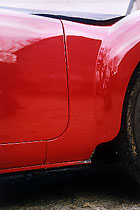
Look particularly for any taper in the gaps between the doors and body, as the fit of the doors, is a vital guide to the state of the body tub. There is very little facility for adjustment. Any problem with the fit of the door can only be cured by a rebuild. Look under the car and examine the gap between sills and chassis where mud can build up, trap moisture and cause corrosion.
2. Rust points chassis
Although well made in a heavy gauge steel, the chassis is prone to rust in certain areas. Such as the inside face of the chassis centre section where the floor support rails are attached. Moisture trapped by damp plywood floorboards can corrode the steel box side members. Battery cradles which hang out at the rear of the chassis behind the cockpit, are vulnerable to corrosion. The chassis may also suffer from stress induced hairline cracks at the top of the goalpost, where it is joined by the angled bracing members from the front.
3. Rust points body
The body is all steel construction, except for the doors, bonnet and bootlid which are skinned in aluminium.
Reproduction panels are available but expensive and they require considerable skill to fit. There are fairly large stocks of used components available, such as chassis and bodies which are well worth considering when engaged in a major rebuild.
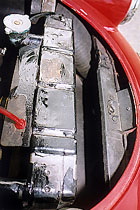
- a. Rust can strike the bottom of the A posts and sill reinforcement areas, door pillar assemblies or F sections, around the goal posts, the cross member behind the seats, rear wings, the inner wing panel within the boot and the boot floor.
b. Examine the inner front wings, rear splash panels, and door bottoms.
c.Inspect the nose section for damage, the radiator duct panel can get bent and then hold water, which will eventually corrode the front mounting points.
d. Often the main body tub will rust more than the wings, usually where the wings are attached.
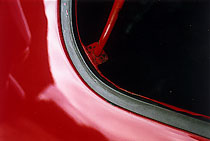
e. Water can become trapped beneath the rubber seal in the boot return lip.
Coupes are particularly susceptible to rust where the roof meets the rear deck.
4. Gearboxes
Can be noisy. First and reverse have no synchromesh, often these and the lay gear clusters get damaged and need replacing. Layshaft needle roller bearings are also a weak point. The second/third gear synchromesh baulk ring wears out, causing wear to the dog teeth on the gears, and the synchronizer hubs wear out. Worn gearboxes may jump out of third on the overrun. New gearbox spares are not available – although close-ratio gear sets are.
5. Engines
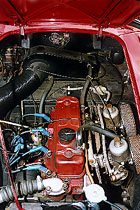 1500 – 1600
The B series engine is extremely robust and straightforward to rebuild. Oil leaks are common, especially from the rear of the crankshaft. Despite noisy tappets the engines are simple to maintain and generally give many years of service. Oil pressure should be 20 psi at tickover and 50 – 60 psi at normal running speeds. A smell of oil in the exhaust is good indication of wear. Remove the oil filler cap with the engine idling and watch for puffs of oily smoke. Examine the cylinder head carefully for trails of anti-freeze or rust stains which can reveal cracks, especially around the spark plugs. If the engine needs a replacement, then a reconditioned unit is a often a better option than rebuilding, but will cost around £1000.
Twin Cams gained an initial reputation for being unreliable and difficult to service, as a result these engines are now very rare and expensive to rebuild. If you wish to buy a Twin Cam, insist on seeing the documentation for all work carried out on the engine.
6. Axle
Can become noisy but rarely gives problems. The 1600 MkII has the advantage of a higher ratio rear axle.
7. Front suspension
Swivel pins wear badly if not greased regularly and may have seized to the trunnions, if car has been left standing for along period.
8. Interior
Originality is important to preserve the value of the car. Quality carpet and trim kits are available often to a higher specification than the originals.
Road test
Gear change should be pleasant, although there will be a moderate amount of transmission noise. Pushrod cars are brisk and handle well, giving the car adequate performance. Steering should be excellent with plenty of feel and only moderate kick back through the steering wheel. Handling should be very predictable. If the car rolls on corners and plunges under braking, then the shockers are worn. Although early cars had drum brakes these should cope adequately with the MGAs performance and provide plenty of feel. Later, pushrod models had discs at the front and drums at the rear which work very well.
Originality
With the MGA the originality of the specification is important. However, in the past it was not unusual for a 1500 model to be updated to MkII specification. Examine the chassis number to verify the age of the model. As coupes are cheaper to buy, it is not uncommon for them to have been rebuilt as roadsters. MGA 1500 pushrod engine cars should have the chassis number prefixes, H for an MGA model, with the second letter denoting body type, D is for open two-seater or M for coupe, and the third letter is for the class of colour. With the MGA 1600 and 1600 Mk II, BMC introduced a new prefix system, in which the first letter G means MG, and the second letter H denotes an engine size of 1400-1999cc, followed by either N for roadster or D for coupe. Twin Cams had their own prefix system with the first letter as Y for MGA Twin Cam, and the second letter denoting body type, either D for open two seater or M for coupe. The chassis number series for the MGA 1500 was 10101-68850, for MGA 1600 MkI was 68851-100351 and the MGA 1600MkII was 100352 to 109070. Twin Cams have the series of numbers 501 to 2611. If you telephone British Motor Heritage Trust on 01926 641188, they can use the chassis number to look up the original specification of the car for you; they will make a charge for this service.
Conversions from left hand drive
There is no problem with these cars if the conversion is done well. If you are buying from the person who has carried out the conversion, ask for the surplus LHD parts. You may want to sell the car on to a European buyer. When Twin Cams have been altered, check that you can still lubricate the steering rack. Do not assume that all cars imported from the USA are rust free; this is not necessarily the case, check them thoroughly. 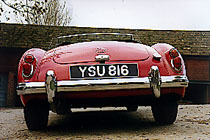
Provided you can find a car with a sound body and chassis, the MGA can prove to be a uniquely practical classic sportscar with great charm and character.
Richard Ladds